BTC USD 86,408.3 Gold USD 4,336.37
Time now: Jun 1, 12:00 AM

Forex daily News FBS

Analysts: how about $20 for Brent oil?

Check more: http://bit.ly/39CIY3y

10.03.2020

Oil market crashed after OPEC+ didn’t agree on production cuts. Brent slid as low as to $31.27 a barrel. WTI hit $27.34 a barrel. Both benchmarks haven’t really started to close this week’s bearish gap. What’s next? Let’s see what bank analysts have to say about this.

BNP Paribas

There will be more volatility in oil prices in the next two weeks as that is when the OPEC’s cuts agreement officially ends. The odds are that during this time oil will remain under pressure. What is happening between Saudi Arabia and Russia is a high-stakes poker game.

MUFG

Traders should be ready for prices staying below $30 a barrel in the second quarter of 2020. The commodity’s price has no support on the downside and may fall below $25 a barrel. Models now forecast quarter-end 2020 levels for Q1, Q2, Q3 and Q4 2020 at $28.6 a barrel, $32.3/b, $35.6/b and $46.1/b, respectively.

Bank of America

Brent oil may temporarily fall to $20 a barrel range over the coming weeks as there’s a big shift in Saudi's approach: the country has started giving discounts and will probably allow inventories to build.

Citigroup

There’s a unique combination of demand and supply shocks that could send prices into the $20s.

UNU5ZnJ9YcdBUa_y_640x320_q80v3.jpg
 
Gold price has dropped

More at: http://bit.ly/39PVkp1

12.03.2020

What happened?

Gold has been falling since the start of the week. Despite the increase of the coronavirus fears, the precious metal – a well-known safe haven – depreciated. XAU/USD reversed down from the $1,700 area and dropped to $1,586 at the moment of writing (March 12, 16:00 MT time).
What are the reasons?

The primary reason of gold’s depreciation is technical correction. Earlier the price has risen to the highest levels since 2012, and that was simply too much too fast, so buyers took profit. The previous candlestick on the monthly chart looks very similar to the one currently forming at that timeframe. February’s candlestick has a big upper wick. This means that the price met resistance and wasn’t able to keep going up.

What’s next?

The natural question now is, “Will gold keep falling?”

The answer is, “Yes, the price may visit lower levels”. On the W1, there’s bearish divergence between the price and the Awesome Oscillator. A weekly close below $1,590 will produce a bearish engulfing pattern on the W1. Support is located at $1,557 (September highs) and 1,535 (100-day MA). The next key level on the downside will be at $1,500. Resistance is at $1,600 and $1,650.

Fundamentally, the reasons for higher gold prices are still here: the coronavirus uncertainty, the easing of monetary policy of large central banks. As a result, watch technical levels. If the signs of reversal to the upside appear at the mentioned support levels, consider bullish positions.

MDBCXwn9FM8t5GG1_640x320_q80v3.jpg
 
BOE rate cut: what's next for the GBP?

Check more: http://bit.ly/33lm1zA

11.03.2020
What?

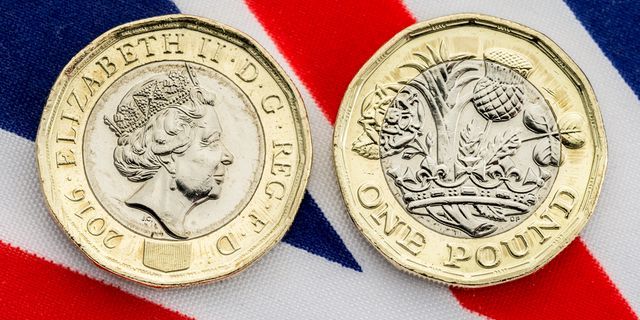
Today, the Bank of England made an emergency cut of its interest rate. The regulator shifted the interest rate by 50 basis points to 0.25%. The action was driven by a slowdown of the British GDP growth for January (0% vs. 0.2% expected) and the global uncertainties amid the coronavirus outbreak.

UK GDP growth rate

5756767.png

Source: Trading economics

But there is some optimistic news as well. During the press conference, the BOE governor acknowledged the economic shock caused by the virus, but, at the same time, expressed confidence about its temporary effect. Thus, the weakness of the GBP was short-lived, as bulls took over the market on the Mr. Carney’s beliefs.

345.png

Even though GBP/USD plunged below the 1.2864 level, buyers managed to push it higher and help it to retest the 1.2977 level.
What's next?

If you’re the GBP trader there is no time to relax today. The upcoming UK budget update at 14:30 MT time will contain stimulus measures, which are expected to support the economy and businesses. Follow the updates, as they may have an impact on the GBP.
Time to trade on the GBP?

The market presents a wide range of opportunities today. Besides GBP/USD, take a look at the EUR/GBP. This pair may be a good choice for those who don’t want to deal with the USD volatility expected on the US inflation release at 14:30 MT time.

V0SZUXrlHtf9rl6u_640x320_q80v3.jpg
 
Central banks: all as one

More at: http://bit.ly/2TSnbPX

16.03.2020

With emergency meetings taking place every two days, it is becoming irrelevant to anticipate outcomes of the planned economic events. For this reason, let’s just recap what happened recently and try to have a broader perspective.
Rate-cutting spree

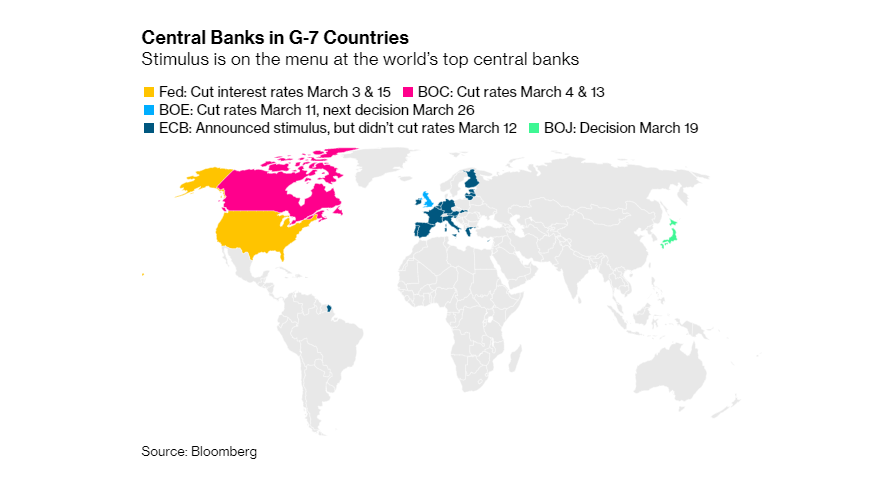
All major central banks have already reacted to the coronavirus fallout by either cutting interest rates or announcing quantitative ease measures – or both. The map below shows what corresponds to the G-7, and note how quickly evolve in the context of the recession fears: this map from Bloomberg’s fresh (this Monday) article only leaves it to the Bank of Japan to take action on March 19 – and the Japanese financial officials have just had an emergency meeting! They left the interest rate unchanged but informed the audience on extensive quantitative ease measures, announcing their full commitment to the G-7 countries to support the level of US dollar liquidity in line with their overseas colleagues.

1.png
Any ace up the sleeve?

Quite controversially, the fact the financial authorities reacted to the coronavirus fallout comes with little consolation. Most of the banks have already fired most of the available artillery at the recession risks. That means, there is very little monetary financial capacity left for the financial authorities of the strongest countries – if any. And that’s while the coronavirus has just started its march into the countries of the most developed and wealthy part of the globe. It appears that the true fight for the global economy will be a test for lengthy economic resilience, and there is normally little chance left for a combatant who fires most available ammunitions at the first strike.
What next?

The US President, a strategic supporter of low domestic interest rate, finally expressed his joy seeing the US Fed cutting the rate to the target range of 0-0.25%. Was Wall Street happy as well? Barely so. Most observers either called for more stimulus or blamed the Fed for panicking and bringing even more run-for-your-life mood into the investors’ circles. Obviously, we are yet to see how the situation around the coronavirus develops, but the currently, financial circles prefer a cautiously modest economic view of the nearest future. Most of the media prefer to view the situation as multi-alternative and restrain from direct predictions. In the meantime, Goldman Sachs sees S&P dropping to 2000 as one of the scenarios. Currently, it is at 2666, which is 21% lower than its recently left all-time high of 3400. So let hope for the best, prepare for the worst, and use the opportunities we have now!

1584342688-4a47a0db6e60853dedfcfdf08a5ca249_1200x1200_q90v3.png
 
Australian job data: the ray of hope for the AUD

More at: http://bit.ly/2WkmvVa

17.03.2020

Australia will publish an update on employment figures on March 19, at 2:30 MT time.

Instruments to trade: AUD/USD, AUD/JPY, AUD/CHF

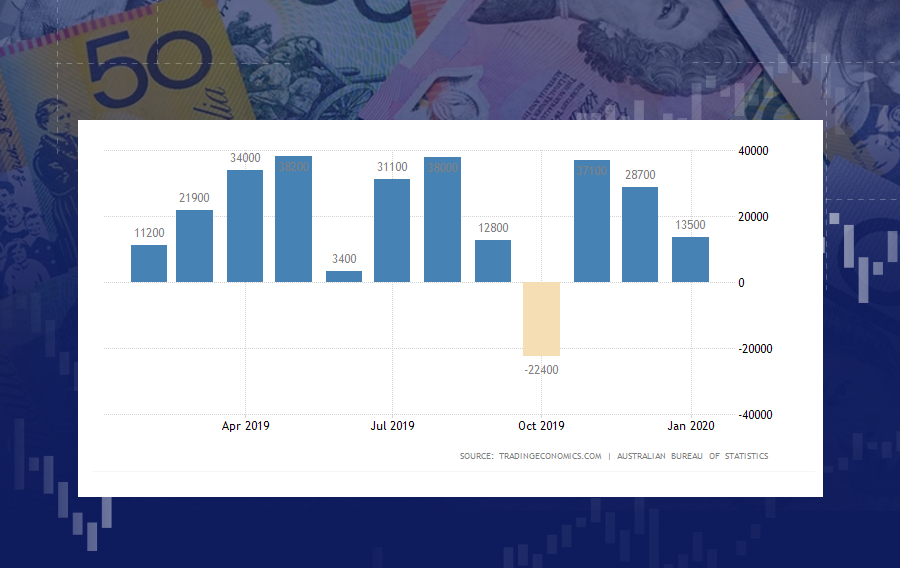
If you are tired of coronavirus-related news, we recommend you to take a look at the economic calendar. Some of the opportunities may not have as a big effect on the currencies as during the calm times, but traders may still take advantage out of their outcome. One of them is the employment data for Australia, which consists of employment change and the unemployment rate. The previous release was mixed: while employment change advanced by 13.5K, the unemployment rate rose to 5.3%. The reaction of the AUD was limited. What can we expect this time?

If the actual level of employment change is higher and the unemployment rate is lower than the forecasts, the AUD will strengthen;
If the actual level of employment change is lower and the unemployment rate is higher than the forecasts, the AUD will weaken.

Check the economic calendar

1584433926-1d8512ddfa63f1dc660f9aef8a0470c6_1200x1200_q90v3.png
 
The US Fed: salvation cometh

More at: https://bit.ly/2J9011t

24.03.2020

Economy bailout

Until recently, observers were complaining that the US Fed’s financial aid was not enough to keep the American economy going at acceptable pace. Well, it seems their prayers were heard: the Fed is opening its unlimited power to the market now. Its’ aid will be literally unlimited: Jerome Powell’s team promised to buy as many government-backed bonds and mortgage-backed securities as its required to ensure the virus hit doesn’t inflict too much damage. “Aggressive efforts must be taken across the public and private sectors to limit the losses to jobs and incomes and to promote a swift recovery once the disruptions abate”, the Fed stated on Monday.

Essentially, that means, while the congress keeps discussing a $2trln stimulus, the Fed steps in to finance businesses and individuals directly, extending their support much beyond critical parts of the economy. That’s about time: observers predict the inevitable recession to the US economy and job losses in the rage of 1mln due to the coronavirus.
Forex

The US dollar responded immediately, as it was supposed to just like in any other case of such a large currency influx: it eased its grip on the market. Even the weak currencies such as MXN, TRY and RUB got an opportunity to relax a bit after an unstoppable onslaught of the USD. Gold surged as well, taking back its privileges as a safe-haven commodity.

Stocks

S&P dropped to 2175 – its lowest market since 2016. But the Fed’s actions made it get back up to 2320. Observers comment that although there still is certain bearish potential, there are reasons to expect recovery over the pass. For this reason, it is a good moment to watch for the pick-up signs for a possible buy in the nearest future.

nCubGw1Nj9TKEsXH_640x320_q80v3.jpg
 
Euro zone suffers loss of economic activity

Check more: https://bit.ly/2xowjDl

26.03.2020

What is happening?

Economic activity in service sector in the Euro zone and the UK is on its lowest rates since 2009.

How do we now that?

On Tuesday leading indicators of economic health in France, Germany and UK were released – French, German and UK Flash Services PMI. The numbers are disappointing as they came out below the expected level. At the same time, manufacturing industries were actually doing better than economists had predicted.

These indicators show how purchasing managers assess business conditions today. With people in France, Spain and Italy confined to their homes, travel plans being abandoned, with restaurants and other entertainment places being shut down, there is no surprise that service sector is struggling today.

What does it mean?

These indicators gave a first signal that euro zone economy is tilting to recession. Governments have started to guarantee loans for small companies, help those who lose their jobs, and boost spending. However, the European lockdowns will leave a 350 billion-euro hole in household incomes and company profits.

The threat is that if the containment measures are needed a long time, the euro area will collapse. The UK economy will contract by at least 10% in the first half of the year, according to Bloomberg Economics’ estimates. The economy in euro area is forecast to shrink 3.1% in first quarter, with another blow of 2.4% in the second.

The future of euro-area economy mostly depends on the measures that governments will take. That is why right now it is quite necessary to get updated not to miss fresh news that might influence the market.

The ECB and the EUR

The European Central Bank makes all efforts to cope with the extraordinary shock that stunned the market. For this reason, it scrapped most of the bond-buying limits in its 750 billion-euro ($819 billion) pandemic emergency program.

This program will continue all this year and will also allow the ECB to buy bonds with shorter maturities.

The long-term perspective of euro will depend on its effectiveness of every member of euro zone. We will monitor the situation closely and keep you updated as always.

CNp_joL6ge_7oYWk_640x320_q80v3.jpg
 
Forex market update on March 30

More at: https://bit.ly/3dzC8hP

30.03.2020

To start the week, let’s throw a quick glance on the market disposition this Monday.
Forex

No big movement so far, with USD and JPY being moderately strong against their counterparts. In general, the overall mood of the market is very cautious. Very possibly, currency investors are not yet sure how to interpret Donald Trump’s recent stepping back from his previous call to resume normal activity by Easter. Now, the virus state is extended until April 30 in the US. So the audience is watching for more fundamentals on the USD to factor it into this week’s movements.

USD/JPY: support 107.00, resistance 108.50

Gold

The precious metal has lost its momentum for the upside. Currently, it trades at $1,615 per ounce and is likely to continue the consolidation at this level. As there is no certainty on the market about the nearest perspectives, and the positivity is hardly outweighing the pessimism of what’s going on, so is the gold – hanging there at the ranges of $1,610-1,620.

XAU/USD: support $1,600, resistance $1,645

Oil

The oil market is now in a “prepare for the ride” state. Most media reiterate the truth that Donald Trump lost the opportunity to lead the global oil market anywhere, and even if he wanted it now, it is too late. Saudi Arabia and Russia show no more sympathy to each other nor any more concern by the global consequences of the oil price war. These last days of March will end the current period of output limitations following the December agreements of the OPEC+, now obsolete. Hence, Wednesday will be the first day of the truly free oil market. Probably, that is going to be an example that freedom without limitations is no good for anyone. In the meantime, the oil price is at decade-long bottom levels.

WTI: support $20, resistance $28

NNTjp79Wm60DLrt8_640x320_q80v3.jpg
 
Is Chinese economy rebounding?

More at: https://bit.ly/2w2wfsp

31.03.2020

It seems that China may have defeated the pandemic as the coronavirus cases has dramatically fallen there. The country has come through the worst and is recovering now.

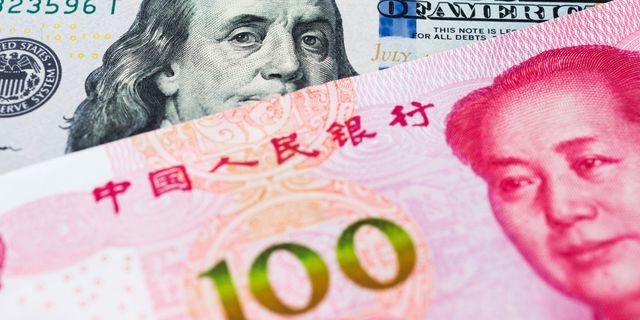
Today China Manufacturing PMI (purchasing managers’ index ) was released and it went beyond all expectations as the index was 52.0 with forecast of 44.9 while previous one was 35.7!

What does it mean for China?

It’s excellent for the Chinese yuan. Indexes above 50.0 indicate industry expansion as it’s widely assumed, but nowadays it doesn’t mean that Chinese economic activity has fully resumed. The country might avoid a recession but, anyway, will undergo a steep slowdown because of the virus shocks on production and demand. World Bank downgraded China’s 2020 GDP forecast to 2.3% versus 6.1% reported for 2019.

What does it mean for the world?

The whole world is suffering from the virus now and this shock will affect greatly almost every country as economies are all intertwined. As Michael Howell from London’s CrossBorder Capital Ltd. said, we should be ready for the turnaround of the lead economy. Who knows, maybe US dollar will cede its place to the Chinese yuan. However, this is an assumption, which may not hold up.

Technical analysis of USD/CNH

Let’s look at the USD/CNH chart. It’s now on 7.1060 mark crossing Moving Average of 50. The rebound of the Chinese PMI should strengthen the Chinese yuan. Despite that fact, we see the upward trend and the pennant, so, we can assume that, the graph should surge after it.

Chinese PMI affects Australian dollar

Moreover, the Australian dollar bounced back substantially from the Chinese PMI data. Often the Australian dollar acts as a Chinese-economy proxy bet. Moreover, 2.2 trillion dollar US stimulus package improved the global risk sentiment, what was beneficial for riskier currencies, including the aussie. However, worries about the financial downturn from the coronavirus support the US dollar's perceived safe-haven status.

We see the AUD/USD pair on 0.6090 mark now. It almost reached 61.8% Fibonacci retracement level with 0.62300 mark and then turned back to 50%. It’s the decisive moment, will it go down breaking through 50% Fibonacci retracement level or continue its growth.

NvAs7rdpojKxof9J_640x320_q80v3.jpg
 
Employment data may make the USD volatile

Check at: https://bit.ly/34dLtHA

01.04.2020

The US Non-farm payrolls, also known as NFP, will be published on April 3, at 15:30 MT time.

Instruments to trade: EUR/USD, USD/JPY, USD/CHF

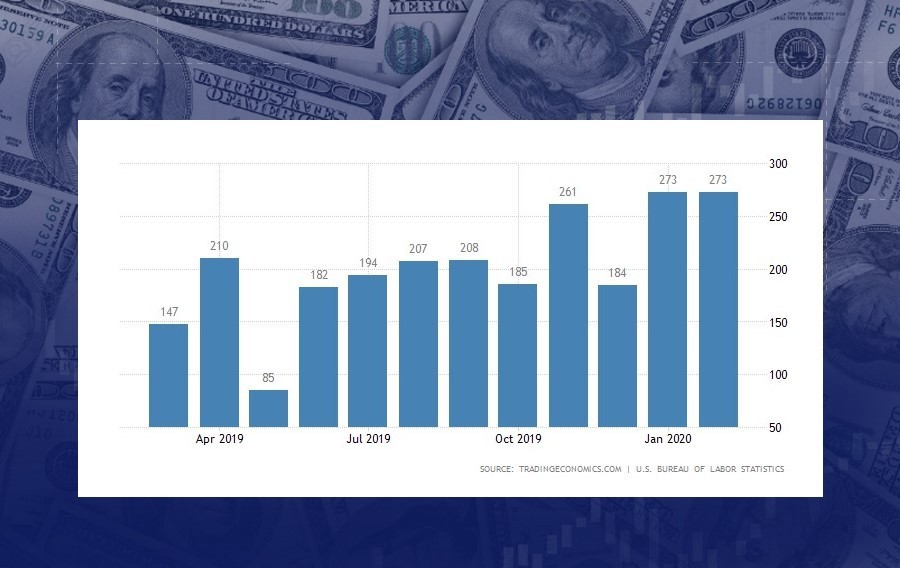
The indicator represents the change in the number of employed people during the previous month excluding the farming industry. Traders pay huge attention to it, as it makes the US dollar highly volatile after the release. It’s worth mentioning that it comes out at the same time with the level of average hourly earnings and the unemployment rate. In March, the level of non-farm payrolls greatly outperformed the forecasts with 273K (vs. 175K). The average hourly earnings came out in line with expectations of 0.3% and the unemployment rate fell to 3.5%. Despite such a positive release, the reaction of the USD was limited. The currency was already struggling with coronavirus fears. This time the situation may be completely different after the record-high unemployment claims last week. It increased the risks of this employment data coming out significantly lower than in the previous release. On the other hand, if non-farm employment change and average hourly earnings are higher and the unemployment rate is lower than the forecasts, the USD will rise.

• If the actual levels of employment change and average hourly earnings are higher and the unemployment rate is lower than the forecasts, the USD will rise;

• If the actual levels of employment change and average hourly earnings are lower and the unemployment rate is higher than the forecasts, the USD will fall.

Check the economic calendar

1585749402-dad2e739aad5cc59105854630c959d65_1200x1200_q90v3.jpg
 

Live Forex Chart

Currency
Rates
EUR / USD
1.14318
USD / JPY
157.552
GBP / USD
1.33245
USD / CHF
0.82195
USD / CAD
1.40721
EUR / JPY
180.111
AUD / USD
0.70996
Back
Top
Log in Register