
cek mek molek
CG Super Hardcore Club

- Messages
- 143,166
Paid Membership

- Joined
- Jun 3, 2013
- Messages
- 143,166
- Reaction score
- 25,934
- Points
- 2,866
Ni pendapat yg MENYOKONG ratifikasi anti racism tu
Kua Kia Soong | Published: 23 Oct 2018, 4:13 pm | Modified: 23 Oct 2018, 4:31 pm
KUA KIA SOONG is the adviser of Suaram.
COMMENT | The current debate about whether Article 153 of the Federal Constitution violates the International Convention on the Elimination of All Forms of Racial Discrimination (Icerd) misses the point about Malaysia ratifying this important convention.
The vital question we need to ask is: are we ready to face the world community, and declare that we are free of racially discriminatory policies and practices?
First and foremost, Icerd prohibits policies that have a racially discriminatory impact on any sections of people in the country. Icerd insists that victims of discrimination should have a judicial enforcement mechanism available and the treaty applies to all levels of government – federal, state and local. What could be fairer than that?
Nevertheless, we still have Malaysians who claim that Article 153 guarantees “Bumiputera privileges” and these should not be questioned. But where does it say “Malay privileges” in Article 153? Nowhere in the constitution will you find any reference to “Malay rights” or “Malay privileges”. The article only mentions “the special position of the Malays.”
The main purpose for including Article 153, according to Mohamed Suffian Hashim in An Introduction to the Constitution of Malaysia, was to rectify the perceived weakness of the Malay community in the economic field, the public service and the problem of Malay poverty at the time of Independence.
The first clause of Article 153 states:
It shall be the responsibility of the Yang di-Pertuan Agong to safeguard the special position of the Malays and natives of any of the States of Sabah and Sarawak and the legitimate interests of other communities in accordance with the provisions of this Article.
The second clause stipulates that the Agong shall ensure the reservation for Malays and since 1963, for natives of Borneo
...of such proportion as he may deem reasonable of positions in the public service (other than the public service of a State) and of scholarships, exhibitions and other similar educational or training privileges or special facilities given or accorded by the Federal Government and, when any permit or licence for the operation of any trade or business is required by federal law...
Clause 4 expressly states that:
In exercising his functions under this Constitution and federal law in accordance with Clauses (1) to (3) the Yang diPertuan Agong shall not deprive any person of any public office held by him or of the continuance of any scholarship, exhibition or other educational or training privileges or special facilities enjoyed by him.
The ‘Quota System’ in 1971 was not in the original Article 153.
As a result of the racial violence of May 13, 1969, the country was presented with a fait accompli by the new ruling elite in Umno who were keen to propagate their 'bumiputeraist' ideology as a populist ploy. Again, you will not see any mention of bumiputera (the “princes of the soil”) in the original 1957 constitution.
Thus, in early 1971 the Constitution (Amendment) Act was passed adding a new clause (8A) to Article 153:
Notwithstanding anything in this Constitution, where in any University, College and other educational institution providing education after Malaysian Certificate of Education or its equivalent, the number of places offered by the authority responsible for the management of the University, College or such educational institution to candidates for any course of study is less than the number of candidates qualified for such places, it shall be lawful for the Yang di-Pertuan Agong by virtue of this Article to give such directions to the authority as may be required to ensure the reservation of such proportion of such places for Malays and natives of any of the States of Sabah and Sarawak as the Yang di-Pertuan Agong may deem reasonable; and the authority shall duly comply with the directions.
This is the racially discriminatory “quota system” we have lived with for more than 40 years, and which has created so much controversy in that time. Strictly speaking, if we were to go by Umno's oft-repeated “social contract” at Independence in 1957, this certainly does not include Clause 8A.
And if we scrutinise this clause more closely, we will see that it is definitely not a carte blanche for the blatant racial discrimination as is the case of the enrolment policy at institutions such as UiTM.
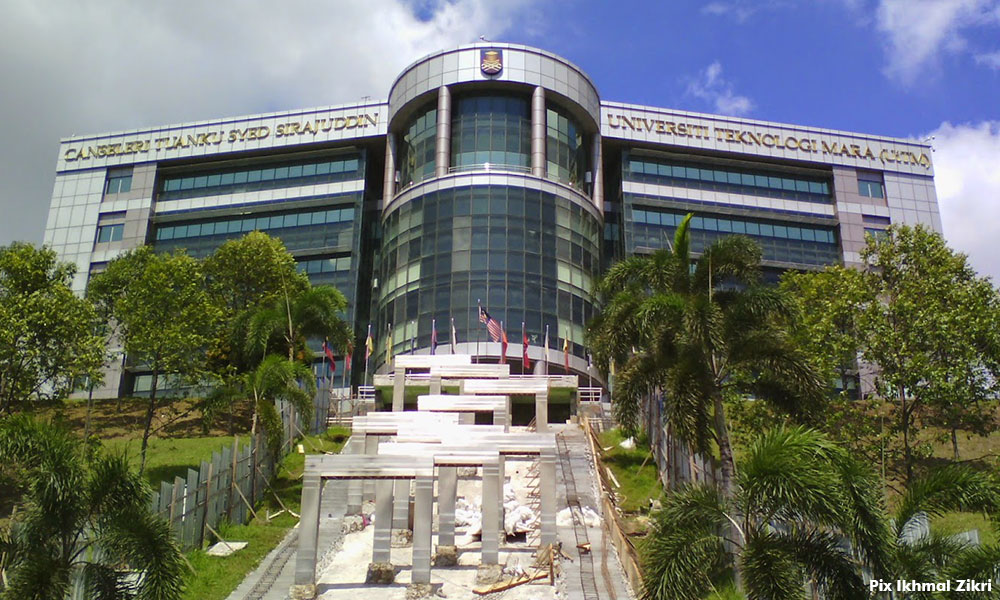
One wonders if the Agong has been consulted and has given “such directions to the authority as may be required to ensure the reservation of such proportion of such places for Malays and natives of any of the states of Sabah and Sarawak as the YDPA deems reasonable” at the various Mara institutions and public tertiary institutions all these years
So, if any aggrieved party took the government to court for its enrolment policy at UiTM or any other Mara institutions, how do you think any Federal Court judge would interpret clause 8A of Article 153? The 100 percent Bumiputera enrolment policy at UiTM makes a mockery of the quota system and the justification of any affirmative action in any country.
Vague definitions
The definition of the main target group in Malaysia, namely, “the Malays” is imprecise and allows confusion when any Muslim who is not ethnically Malay can claim to be a beneficiary. In the US for example, affirmative action is extended to all discriminated groups including, for example, women, Hispanics and other minority groups.
In Malaysia, only bumiputera are included, while the poorest and most marginalised group, arguably the original people of this land, the Orang Asli, have been excluded from this policy.
In strong contrast to the US, affirmative action in Malaysia covers not only higher education but also land reservation, quotas in public service, licences, permits, scholarships and grants.
The most glaring inequity is seen when bumiputera can buy houses costing more than a million ringgit and still claim a discount from the market rate. Can a wealthy African-American in the US do the same?
Clearly, affirmative action cannot be justified across the board for communities that are thoroughly class differentiated, such as the Malays, Chinese and Indians in Malaysia. The Orang Asli are a community that has not undergone class differentiation on a scale similar to the other ethnic communities in Malaysia but they enjoy no such privilege.
A new affirmative action
In Malaysia, since the 1990 deadline signalling the end of the NEP was ignored, it is high time for a new socially just affirmative action policy based on need or class or sector
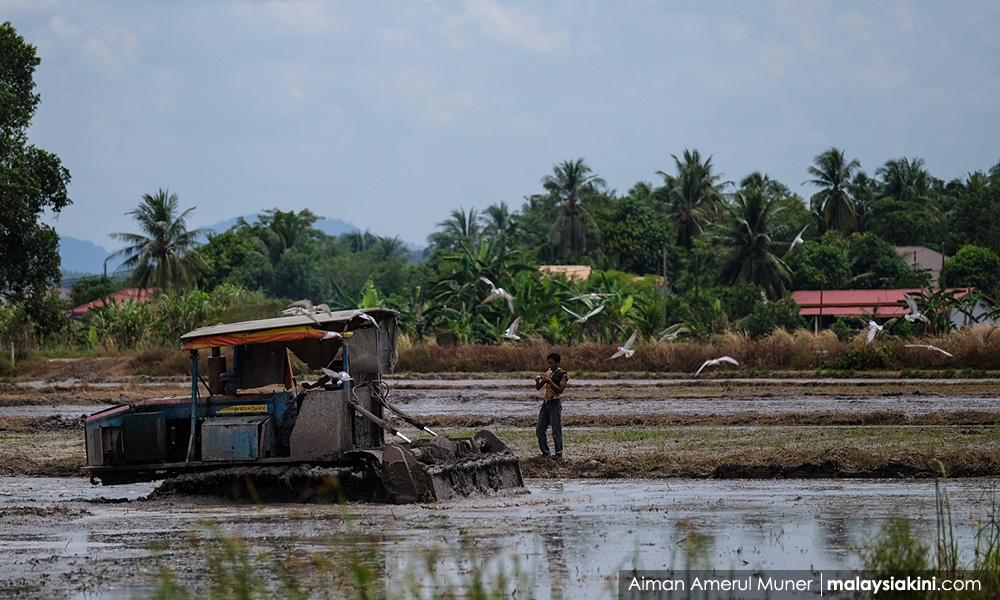
Thus, if Malays are predominantly in the rural agricultural sector, we should create policies that benefit the poor farmers (some of whom happen to be Malay) and not the rich Malay (and others) land-owning class. Only such a race-free policy can convince the people that the government is socially just, fair and democratic and walks the 1Malaysia talk.
Thus, all Malaysians should be able to reclaim their inalienable rights and understand the transient nature of affirmative action. After all, the Reid Commission recommended a 15-year sunset clause for Article 153.
For a truly 'new Malaysia', let there be no more obfuscation about 'rights' of any particular ethnic community but a commitment to unite all Malaysians.
This can be done by eradicating institutional racism through corrective action in all economic and education policies based on need or sector or class with priority given to indigenous people, marginalised and poor communities; implementing merit-based recruitment in the civil and armed services; legislating an Equality Act and incorporating an Equality and Human Rights Commission; and ratifying Icerd.
https://www.malaysiakini.com/news/448630
Debate on Article 153 and UN anti-racism treaty misses the point
Kua Kia Soong | Published: 23 Oct 2018, 4:13 pm | Modified: 23 Oct 2018, 4:31 pm
KUA KIA SOONG is the adviser of Suaram.
COMMENT | The current debate about whether Article 153 of the Federal Constitution violates the International Convention on the Elimination of All Forms of Racial Discrimination (Icerd) misses the point about Malaysia ratifying this important convention.
The vital question we need to ask is: are we ready to face the world community, and declare that we are free of racially discriminatory policies and practices?
First and foremost, Icerd prohibits policies that have a racially discriminatory impact on any sections of people in the country. Icerd insists that victims of discrimination should have a judicial enforcement mechanism available and the treaty applies to all levels of government – federal, state and local. What could be fairer than that?
Nevertheless, we still have Malaysians who claim that Article 153 guarantees “Bumiputera privileges” and these should not be questioned. But where does it say “Malay privileges” in Article 153? Nowhere in the constitution will you find any reference to “Malay rights” or “Malay privileges”. The article only mentions “the special position of the Malays.”
The main purpose for including Article 153, according to Mohamed Suffian Hashim in An Introduction to the Constitution of Malaysia, was to rectify the perceived weakness of the Malay community in the economic field, the public service and the problem of Malay poverty at the time of Independence.
The first clause of Article 153 states:
It shall be the responsibility of the Yang di-Pertuan Agong to safeguard the special position of the Malays and natives of any of the States of Sabah and Sarawak and the legitimate interests of other communities in accordance with the provisions of this Article.
The second clause stipulates that the Agong shall ensure the reservation for Malays and since 1963, for natives of Borneo
...of such proportion as he may deem reasonable of positions in the public service (other than the public service of a State) and of scholarships, exhibitions and other similar educational or training privileges or special facilities given or accorded by the Federal Government and, when any permit or licence for the operation of any trade or business is required by federal law...
Clause 4 expressly states that:
In exercising his functions under this Constitution and federal law in accordance with Clauses (1) to (3) the Yang diPertuan Agong shall not deprive any person of any public office held by him or of the continuance of any scholarship, exhibition or other educational or training privileges or special facilities enjoyed by him.
The ‘Quota System’ in 1971 was not in the original Article 153.
As a result of the racial violence of May 13, 1969, the country was presented with a fait accompli by the new ruling elite in Umno who were keen to propagate their 'bumiputeraist' ideology as a populist ploy. Again, you will not see any mention of bumiputera (the “princes of the soil”) in the original 1957 constitution.
Thus, in early 1971 the Constitution (Amendment) Act was passed adding a new clause (8A) to Article 153:
Notwithstanding anything in this Constitution, where in any University, College and other educational institution providing education after Malaysian Certificate of Education or its equivalent, the number of places offered by the authority responsible for the management of the University, College or such educational institution to candidates for any course of study is less than the number of candidates qualified for such places, it shall be lawful for the Yang di-Pertuan Agong by virtue of this Article to give such directions to the authority as may be required to ensure the reservation of such proportion of such places for Malays and natives of any of the States of Sabah and Sarawak as the Yang di-Pertuan Agong may deem reasonable; and the authority shall duly comply with the directions.
This is the racially discriminatory “quota system” we have lived with for more than 40 years, and which has created so much controversy in that time. Strictly speaking, if we were to go by Umno's oft-repeated “social contract” at Independence in 1957, this certainly does not include Clause 8A.
And if we scrutinise this clause more closely, we will see that it is definitely not a carte blanche for the blatant racial discrimination as is the case of the enrolment policy at institutions such as UiTM.
One wonders if the Agong has been consulted and has given “such directions to the authority as may be required to ensure the reservation of such proportion of such places for Malays and natives of any of the states of Sabah and Sarawak as the YDPA deems reasonable” at the various Mara institutions and public tertiary institutions all these years
So, if any aggrieved party took the government to court for its enrolment policy at UiTM or any other Mara institutions, how do you think any Federal Court judge would interpret clause 8A of Article 153? The 100 percent Bumiputera enrolment policy at UiTM makes a mockery of the quota system and the justification of any affirmative action in any country.
Vague definitions
The definition of the main target group in Malaysia, namely, “the Malays” is imprecise and allows confusion when any Muslim who is not ethnically Malay can claim to be a beneficiary. In the US for example, affirmative action is extended to all discriminated groups including, for example, women, Hispanics and other minority groups.
In Malaysia, only bumiputera are included, while the poorest and most marginalised group, arguably the original people of this land, the Orang Asli, have been excluded from this policy.
In strong contrast to the US, affirmative action in Malaysia covers not only higher education but also land reservation, quotas in public service, licences, permits, scholarships and grants.
The most glaring inequity is seen when bumiputera can buy houses costing more than a million ringgit and still claim a discount from the market rate. Can a wealthy African-American in the US do the same?
Clearly, affirmative action cannot be justified across the board for communities that are thoroughly class differentiated, such as the Malays, Chinese and Indians in Malaysia. The Orang Asli are a community that has not undergone class differentiation on a scale similar to the other ethnic communities in Malaysia but they enjoy no such privilege.
A new affirmative action
In Malaysia, since the 1990 deadline signalling the end of the NEP was ignored, it is high time for a new socially just affirmative action policy based on need or class or sector
Thus, if Malays are predominantly in the rural agricultural sector, we should create policies that benefit the poor farmers (some of whom happen to be Malay) and not the rich Malay (and others) land-owning class. Only such a race-free policy can convince the people that the government is socially just, fair and democratic and walks the 1Malaysia talk.
Thus, all Malaysians should be able to reclaim their inalienable rights and understand the transient nature of affirmative action. After all, the Reid Commission recommended a 15-year sunset clause for Article 153.
For a truly 'new Malaysia', let there be no more obfuscation about 'rights' of any particular ethnic community but a commitment to unite all Malaysians.
This can be done by eradicating institutional racism through corrective action in all economic and education policies based on need or sector or class with priority given to indigenous people, marginalised and poor communities; implementing merit-based recruitment in the civil and armed services; legislating an Equality Act and incorporating an Equality and Human Rights Commission; and ratifying Icerd.
https://www.malaysiakini.com/news/448630
Last edited:


