Elina-Ward
Fun Poster
- Messages
- 136
- Joined
- Dec 2, 2025
- Messages
- 136
- Reaction score
- 5
- Points
- 25
Wednesday 17 June 2026
XAU/USD Analysis — 14 June 2026 to 17 June 2026Timeframe: H1 | Net Move: +1.49% | Range: +2.37% | Bias & Key Risk: Bullish Recovery with Fed & Deal Risk
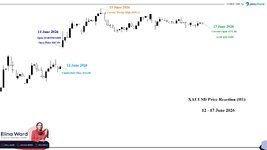
From 14 June to 17 June 2026, spot gold (XAU/USD) opened with a strong weekend gap higher, rising from the 12 June close at 4,216.96 to the 14 June open at 4,267.94. The move extended into 15 June, when gold reached the current weekly high at 4,369.12, before cooling and stabilising around the 17 June current open at 4,331.48.
The move showed that gold was supported by a major shift in the geopolitical and macro backdrop after headlines confirmed progress on a US–Iran agreement and a possible reopening of the Strait of Hormuz. However, the rally was not only a classic safe-haven move. Gold also benefited because the agreement pushed oil prices lower, reduced fears of another energy-driven inflation shock, eased rate-hike expectations, pressured Treasury yields, and weakened the U.S. dollar backdrop.
By 17 June, XAU/USD had pulled back from the weekly high but remained above the 14 June opening level. This showed that the immediate peace-deal optimism had already been partly priced in, while the market waited for the Federal Reserve decision and more confirmation around the US–Iran deal implementation.
PRICE ACTION SUMMARY
| Metric | Value |
| 12 June Close | 4,216.96 |
| 14 June Period Open | 4,267.94 |
| Current Weekly High | 4,369.12 |
| 17 June Current Open | 4,331.48 |
| Weekend Gap (12 Close → 14 Open) | +1.21% |
| Net Move (14 Open → 17 Current Open) | +1.49% |
| Open → Weekly High Move | +2.37% |
| High → Current Open Pullback | -0.86% |
| 12 Close → Current Open Move | +2.72% |
🔴 RESISTANCE said:4,369.12 — Current weekly high reached on 15 June. This became the main resistance area after the weekend gap and US–Iran deal-driven rally.
🟢 SUPPORT said:4,267.94 / 4,216.96 — The 14 June open at 4,267.94 acted as the main post-gap support reference, while the 12 June close at 4,216.96 marked the pre-gap base before the weekend move.
FUNDAMENTAL DRIVERS
US–IRAN PEACE DEAL & STRAIT OF HORMUZ
The main catalyst for gold was the US–Iran agreement headline and the possibility of reopening the Strait of Hormuz. The deal changed the market’s view of the conflict because the biggest concern had been energy disruption. Once traders started pricing in improved oil flows, the geopolitical shock shifted from an inflationary threat into a relief story.
WEEKEND GAP HIGHER
Gold opened sharply higher on 14 June, creating a weekend gap from 4,216.96 to 4,267.94. This reflected how quickly traders repriced the market after the weekend headlines. The gap showed that buyers reacted before normal weekday liquidity fully returned, and the move continued into 15 June as gold reached 4,369.12.
OIL PRICES & INFLATION EXPECTATIONS
Oil remained the key transmission channel for gold. Earlier in the conflict, higher oil prices had pressured gold because traders feared that energy-driven inflation would force the Federal Reserve to stay restrictive for longer. After the US–Iran deal headlines, falling oil prices reduced that inflation pressure. This supported gold because lower inflation risk reduced the need for additional Fed rate hikes.
U.S. TREASURY YIELDS & FED EXPECTATIONS
Gold benefited as rate-hike fears eased and Treasury-yield pressure softened. Since gold does not pay interest, lower yields reduce the opportunity cost of holding XAU/USD. This helped explain why gold was able to rally even though the headline itself was a de-escalation story rather than a fresh escalation shock.
U.S. DOLLAR WEAKNESS
The U.S. dollar came under pressure as peace-deal optimism improved global risk sentiment and reduced defensive dollar demand. A softer dollar made dollar-priced gold more attractive for non-U.S. buyers, adding support to the move above the 4,300 area.
FED INTEREST RATE DECISION
The 16–17 June FOMC decision remained the biggest event risk for gold. Traders expected the Fed to hold rates steady, but the market focus was on the tone of the statement and the press conference. If the Fed sounded more hawkish because inflation remained elevated, gold risked losing momentum. If the Fed acknowledged easing oil-driven inflation pressure, gold had a stronger chance of holding its recovery.
GEOPOLITICAL & SAFE HAVEN
Geopolitics affected gold in a more complex way than usual. Normally, conflict risk supports gold directly through safe-haven demand. In this case, the key market concern was oil-driven inflation. When the US–Iran deal reduced oil and inflation pressure, gold rose because the rate outlook became less restrictive. This meant gold was supported by de-escalation, lower yields, and a weaker dollar at the same time.
INTERMARKET CORRELATIONS
| Asset | Move / Bias | Context |
| Gold (XAU/USD) | +1.49% | Gold moved from the 14 June open at 4,267.94 to the 17 June current open at 4,331.48 after reaching a weekly high at 4,369.12. |
| Oil | Lower | US–Iran deal optimism and potential Hormuz reopening reduced the energy-risk premium and eased inflation fears. |
| U.S. Treasury Yields | Lower Pressure | Lower oil and inflation concerns reduced the need to price in a more aggressive Fed path. |
| U.S. Dollar | Softer Bias | The dollar weakened as peace optimism improved risk sentiment and reduced defensive demand. |
| Equities | Risk-On | Global stocks were supported as investors welcomed lower oil prices and reduced geopolitical stress. |
WHAT TO WATCH NEXT
June 17, 2026 — Federal Reserve Policy Decision
The Fed decision was the key short-term event for XAU/USD. Gold was sensitive to whether the Fed focused on easing oil-driven inflation pressure or maintained a hawkish tone because inflation remained above target.
US–Iran Deal Details — Signing, Implementation, and Hormuz Flows
Markets were watching whether the agreement would be formally implemented and whether the Strait of Hormuz could reopen smoothly. Any delay, disagreement, or renewed tension could quickly bring geopolitical risk back into oil and gold.
Oil Market Reaction — Brent, WTI, and Energy Inflation
Oil remained the most important macro link for gold. If oil continued to fall, inflation pressure could ease further and support gold through lower yields. If oil rebounded because the deal stalled, gold could face a mixed reaction: safe-haven demand could rise, but inflation and Fed-rate pressure could return.
4,369.12 Weekly High — Key Technical Resistance
The 15 June high at 4,369.12 became the main upside level to watch. A failure to reclaim this zone would show that gold was consolidating after the gap rally, while a sustained move above it would confirm renewed bullish momentum.
4,267.94 Gap Open — Key Technical Support
The 14 June open at 4,267.94 remained the key downside reference. A move back toward this level would suggest that the weekend gap was being tested, while holding above it would keep the recovery structure intact.
BIAS & KEY RISK said:BULLISH RECOVERY WITH FED & DEAL RISK
XAU/USD remained in a bullish recovery from 14 June to 17 June after the weekend gap lifted gold from 4,216.96 to 4,267.94 and the rally extended to a weekly high of 4,369.12. The move was supported by US–Iran peace-deal optimism, lower oil prices, reduced inflation fears, softer rate-hike expectations, a weaker U.S. dollar, and lower Treasury-yield pressure.
CRITICAL RISK: The main risk for gold was a hawkish Fed surprise or a breakdown in the US–Iran agreement. A more hawkish Fed tone could lift yields and pressure XAU/USD, while renewed tension around the Strait of Hormuz could push oil higher again and revive inflation concerns. Gold’s recovery remained stronger while price held above the 4,267.94 gap-open zone, but the 4,369.12 weekly high remained the key resistance level to break.
PROFIT STUDY
A trader who was following the US–Iran headlines before the weekend would have known that potential talks could lead to a peace-deal surprise, lower oil-risk pressure, and a strong reaction in gold.
Entering XAU/USD near the 12 June close at 4,216.96 before the weekend gap would have positioned them ahead of the sharp climb toward 4,369.12. On a 1 standard lot position, assuming 100 ounces, that 152.16-point move represented a potential gross movement of $15,216, with required margin of around $843.39 at 1:500 leverage or $210.85 at 1:2000 leverage.
The position did not need to be closed exactly at the high either — closing anywhere within the move after the gap could still have produced a profit. This showed how powerful informed trading around major geopolitical events could be, but also how dangerous weekend gaps and high leverage could become if the market moved the other way.
Attachments
-
 96.3 KB Views: 18
 High-Impact Economic Calendar – 22–28 June 2026
 Week Overview
 HIGH IMPACT for traders
 Monday, 22 Jun 2026
 CA
CA AU
AU JP
JP FR
FR DE
DE EA
EA GB
GB US
US Week Summary
 +5.09 / +3.94%
 Sunday, 28 Jun 2026
 CN
CN CH
CH NZ
NZ