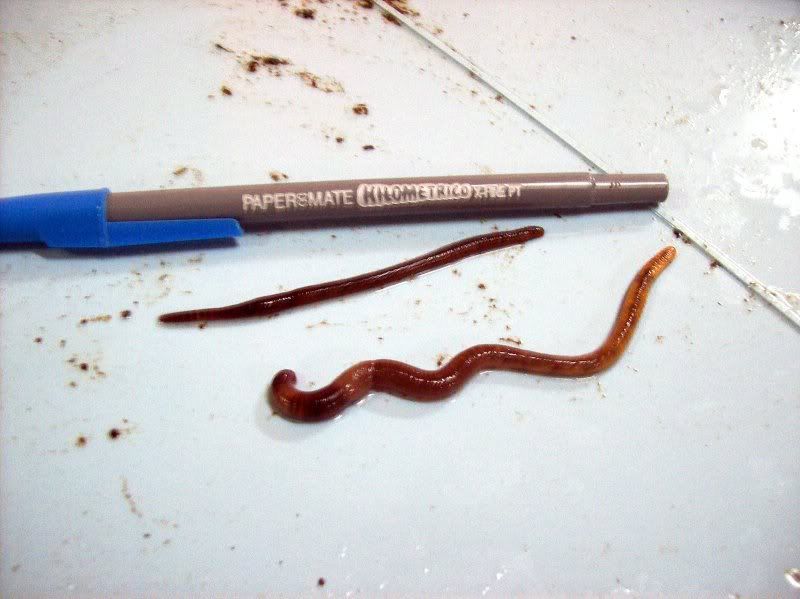
worm article 2
Similar claims about pancreatic enzymes have been made for nearly a century. However this was a rigorously conducted scientific study that was peer-reviewed and published in the official journal of the American Pancreatic Association and the Japan Pancreas Society.
For years opponents of alternative medicine have argued that enzymes taken by mouth would be broken down in the stomach and inactivated before being able to do much good at all. This point of view was thoroughly refuted in 2002 by three physiologists at the University of California-San Francisco. They showed that digestive enzymes can be absorbed into blood, reabsorbed by the pancreas, and reutilized, instead of being reduced to their constituent amino acids in the intestines. This is called the enteropancreatic circulation of digestive enzymes (Rothman 2002). But clearly news of this established fact hasn't reached the implacable opponents of complementary medicine. For instance, an attack on the work of Dr. Gonzalez, reprinted at the Quackwatch website, states:
"Like all dietary proteins, enzymes are dismantled into constituent amino acids by host proteolytic enzymes in the gastrointestinal tract, thus destroying their enzymatic activity" (Green 1998).
This bucket-of-cold-water argument has now been thoroughly undercut by yet another careful scientific study. We are often warned of the harmful effects of unduly favorable statements about nutritional supplements. But what about unduly negative statements? It was because of such dogmatic statements on the alleged destruction of enzymes in the stomach that thousands of people have been dissuaded from taking supplemental enzymes. Now we learn that certain enzymes can not only survive the stomach but can enter the bloodstream in their active form. However, I have yet to hear a word of correction or apology from the self-proclaimed refuters of CAM cancer treatments on this important topic.
Enzymes are an endlessly fascinating and extremely promising area of medicine, including CAM. They are a natural part of most raw foods and are created by our bodies to aid digestion. Explored and then forgotten as treatments, they have been repeatedly rediscovered around the world. I have mentioned the Asian work with earthworm enzymes. In England, not long after Darwin's time, a brilliant embryologist at the University of Edinburgh, John Beard, PhD, first suggested the use of pancreatic enzymes as a treatment for cancer. He even wrote a book in 1911 called The Enzyme Treatment of Cancer and its Scientific Basis. He got little for his pains but trouble at the hands of a furious medical profession. Today his work is all but forgotten.
In the US in the 1950s and 60s, a doctor named Frank. L. Shively, MD, of Dayton, Ohio used a similar approach. He reported excellent results in human patients using injected enzymes. When he tried to convince his colleagues of the efficacy of this treatment he was stymied. Being unable to find a regular publisher, Shively self-published a long typewritten manuscript on this approach, The Multiple Proteolytic Enzyme Therapy of Cancer, with documentation of many successes. He was scorned by most of his medical colleagues. Today he is almost completely unknown and copies of his manuscript are very rare. (I have one of the few existing copies.)
In Germany, where natural treatments are widely accepted by the medical profession, the use of enzymes has been more favorably regarded. Much of this goes back to the post-World War II-era work of Max Wolf, MD, and his disciple, Karl Ransberger, PhD, who together wrote the classic book, Enzyme Therapy. Together, they founded Mucos Pharma to market enzyme products, such as the celebrated Wobenzyme. A visit to the bookstore at the annual "Medicine Week" (Medezinische Woche) meeting in Baden-Baden reveals numerous titles in German on the same topic. Almost every European clinic that I have visited enthusiastically embraces some form of enzyme therapy.
Yet the use of digestive enzymes remains almost completely unknown to most conventional oncologists in the US. For instance, during the past eleven years (1994-2004) there have been tens of thousands of presentations on a wide variety of other topics at the annual meetings of the American Society of Clinical Oncology (ASCO). Yet in that time there has not been a single study on the topic presented at ASCO, according to that organizationis's website (
www.asco.org).
Failure of the War on Cancer
According to Clifton Leaf, executive editor of Fortune magazine, since 1971 America has spent $200 billion on the war on cancer--with precious little to show for it. This recent analysis, from inside the mainstream media, reiterates what many critics, myself included, have said since the war began. There is an urgent need for the oncology profession to take a more serious look at the best CAM treatments. (For Clifton Leaf's article on why we are losing the war on cancer, go to
http://www.fortune.com/fortune/articles/0, 15114,598425,00.html)
Of this massive sum, only $1.4 million has been spent on the Gonzalez trial and it took a considerable political struggle to get even that single grant approved. The Gonzalez trial moves at a snail's pace for lack of cooperation on the part of conventional oncologists. Every attempt to expose this imbalance in research priorities is met with defensiveness on the part of the cancer establishment. This serves to further isolate proponents of innovative methods, such as enzymes, from the scientific mainstream. In other words, huge sums are poured into dead-end pharmacological solutions, while potential alternatives for cancer are dismissed out of hand as "unproven methods."
It is an intolerable situation. But rest assured, one of these days the worm is going to turn.

paid