
Ms Senorita
Active Member
- Messages
- 1,640
- Joined
- Mar 31, 2014
- Messages
- 1,640
- Reaction score
- 326
- Points
- 41
KUALA LUMPUR (30 Dis): Kerajaan telah bersetuju untuk mengecualikan cukai keuntungan hartanah (CKHT) kepada warganegara Malaysia yang melupuskan hartanah mereka dengan harga yang dipertimbangkan sebanyak RM200,000 dan ke bawah.
Menurut kenyataan Menteri Kewangan Lim Guan Eng hari ini, pengecualian RPGT, mulai 1 Jan 2019, adalah untuk pelupusan hartanah termasuk rumah kos rendah, rumah kos rendah dan rumah mampu milik dari tahun keenam dan seterusnya.
Bagi pengambilalihan aset sebelum 2000, harga pasaran pada 1 Jan 2000 akan digunakan sebagai harga pengambilalihan untuk penjualan harta oleh rakyat Malaysia dan penduduk tetap.
Dasar ini akan berkuat kuasa pada 1 Jan, 2019.
Dalam kes kontrak bersyarat seperti Perenggan 16 dari Jadual 2 Akta CKHT 1976, pengecualian CKHT diberikan ke atas keuntungan daripada pelupusan harta yang diurus pada tahun keenam dan diluar oleh rakyat Malaysia dan penduduk tetap di mana perjanjian jual beli telah ditandatangani sebelum 1 Jan, 2019.
Kelulusan kerajaan atau kerajaan negeri juga akan diperoleh pada tahun 2019 dan seterusnya.
"Dalam Bajet 2019, kerajaan telah bersetuju untuk meningkatkan kadar CKHT ke atas keuntungan daripada pelupusan hartanah dan saham dalam syarikat pemegangan harta pada tahun keenam dan seterusnya dari 1 Jan, 2019," kata Guan Eng.
Bagaimanapun, beliau berkata kerajaan prihatin terhadap kebajikan rakyat dan mahu memastikan mereka tidak dibebani dengan pengenaan CKHT, dan oleh itu kerajaan telah bersetuju untuk memberikan CKHT ini.
Guan Eng berkata kerajaan juga akan mengecualikan cukai perkhidmatan bagi orang yang berdaftar untuk Cukai Perkhidmatan di Kumpulan G (Kumpulan Profesional) yang menyediakan perkhidmatan yang sama kepada yang berdaftar mulai 1 Jan 2019.
Pengecualian yang diumumkan dalam Bajet 2019 bertujuan untuk mengelakkan kenaikan kos akibat cukai berganda dan mengekalkan daya saing industri perkhidmatan tempatan.
Contoh situasi di mana seseorang mendapat pengecualian cukai perkhidmatan adalah seperti berikut: seorang peguam bela dan pseguamcara menyediakan perkhidmatan undang-undang kepada peguam bela dan peguamcara lain akan dikecualikan daripada cukai perkhidmatan.
Kerajaan juga memberikan layanan yang sama kepada perkhidmatan yang dikenakan cukai di negara ini dan yang diimport.
Oleh itu, pengecualian itu juga diberikan kepada perkhidmatan yang dikenakan cukai yang diimport oleh mana-mana syarikat di Malaysia daripada syarikat asing yang merupakan syarikat dalam kumpulan yang sama tetapi terhad kepada jenis perkhidmatan tertentu dalam Kumpulan G.
Pengecualian ini akan diberikan melalui kuasa menteri kewangan.
==================================================
Exemption of RPGT, service tax from Jan 1, 2019
KUALA LUMPUR (Dec 30): The government has agreed to exempt the real property gains tax (RPGT) to Malaysian citizens who dispose of their properties at a consideration price of RM200,000 and below.
According to a statement by Finance Minister Lim Guan Eng today, the RPGT exemption, effective from Jan 1, 2019, are for the disposal of properties including low-cost houses, low-medium cost houses and affordable houses from the sixth year onwards.
For the acquisition of assets before 2000, the market price on Jan 1, 2000 would be used as the acquisition price for the disposal of property by Malaysian citizens and permanent residents.
This policy will come into force on Jan 1, 2019.
In the case of conditional contract such as Paragraph 16 of Schedule 2 of the RPGT Act 1976, the RPGT exemption is given on gains from the disposal of properties transacted in the sixth year and beyond by Malaysian citizens and permanent residents whereby the sale and purchase agreement has been signed before Jan 1, 2019.
The approval from the government or state government will also be obtained in 2019 onwards.
“In Budget 2019, the government has agreed to increase the RPGT rate on gains from disposals of properties and shares in property holding companies in the sixth year and beyond from Jan 1, 2019,” said Guan Eng.
However, he said the government is concerned with the people’s welfare and wants to ensure that they would not be burdened with the imposition of the RPGT, and hence the government has agreed to give this RPGT treatment.
Guan Eng said the government will also exempt the service tax for persons registered for Service Tax in Group G (Professional Group) who provide the same service to registered persons beginning Jan 1, 2019.
The exemption announced in Budget 2019 was aimed at avoiding the increase in cost due to double taxation and maintain the competitiveness of the local service industry.
An example of a situation where a person gets the service tax exemption is as follows: an advocate and solicitor provides legal services to other advocates and solicitors will be exempted from service tax.
The government also gives the same treatment to taxable services in the country and that are imported.
As such, the exemption is also extended to taxable services that are imported by any company in Malaysia from foreign companies that are companies within the same group but restricted to certain types of services in Group G.
This exemption will be given through the power of the finance minister.
Sumber : the edge markets
Update #2
Menurut kenyataan Menteri Kewangan Lim Guan Eng hari ini, pengecualian RPGT, mulai 1 Jan 2019, adalah untuk pelupusan hartanah termasuk rumah kos rendah, rumah kos rendah dan rumah mampu milik dari tahun keenam dan seterusnya.
Bagi pengambilalihan aset sebelum 2000, harga pasaran pada 1 Jan 2000 akan digunakan sebagai harga pengambilalihan untuk penjualan harta oleh rakyat Malaysia dan penduduk tetap.
Dasar ini akan berkuat kuasa pada 1 Jan, 2019.
Dalam kes kontrak bersyarat seperti Perenggan 16 dari Jadual 2 Akta CKHT 1976, pengecualian CKHT diberikan ke atas keuntungan daripada pelupusan harta yang diurus pada tahun keenam dan diluar oleh rakyat Malaysia dan penduduk tetap di mana perjanjian jual beli telah ditandatangani sebelum 1 Jan, 2019.
Kelulusan kerajaan atau kerajaan negeri juga akan diperoleh pada tahun 2019 dan seterusnya.
"Dalam Bajet 2019, kerajaan telah bersetuju untuk meningkatkan kadar CKHT ke atas keuntungan daripada pelupusan hartanah dan saham dalam syarikat pemegangan harta pada tahun keenam dan seterusnya dari 1 Jan, 2019," kata Guan Eng.
Bagaimanapun, beliau berkata kerajaan prihatin terhadap kebajikan rakyat dan mahu memastikan mereka tidak dibebani dengan pengenaan CKHT, dan oleh itu kerajaan telah bersetuju untuk memberikan CKHT ini.
Guan Eng berkata kerajaan juga akan mengecualikan cukai perkhidmatan bagi orang yang berdaftar untuk Cukai Perkhidmatan di Kumpulan G (Kumpulan Profesional) yang menyediakan perkhidmatan yang sama kepada yang berdaftar mulai 1 Jan 2019.
Pengecualian yang diumumkan dalam Bajet 2019 bertujuan untuk mengelakkan kenaikan kos akibat cukai berganda dan mengekalkan daya saing industri perkhidmatan tempatan.
Contoh situasi di mana seseorang mendapat pengecualian cukai perkhidmatan adalah seperti berikut: seorang peguam bela dan pseguamcara menyediakan perkhidmatan undang-undang kepada peguam bela dan peguamcara lain akan dikecualikan daripada cukai perkhidmatan.
Kerajaan juga memberikan layanan yang sama kepada perkhidmatan yang dikenakan cukai di negara ini dan yang diimport.
Oleh itu, pengecualian itu juga diberikan kepada perkhidmatan yang dikenakan cukai yang diimport oleh mana-mana syarikat di Malaysia daripada syarikat asing yang merupakan syarikat dalam kumpulan yang sama tetapi terhad kepada jenis perkhidmatan tertentu dalam Kumpulan G.
Pengecualian ini akan diberikan melalui kuasa menteri kewangan.
==================================================
Exemption of RPGT, service tax from Jan 1, 2019
KUALA LUMPUR (Dec 30): The government has agreed to exempt the real property gains tax (RPGT) to Malaysian citizens who dispose of their properties at a consideration price of RM200,000 and below.
According to a statement by Finance Minister Lim Guan Eng today, the RPGT exemption, effective from Jan 1, 2019, are for the disposal of properties including low-cost houses, low-medium cost houses and affordable houses from the sixth year onwards.
For the acquisition of assets before 2000, the market price on Jan 1, 2000 would be used as the acquisition price for the disposal of property by Malaysian citizens and permanent residents.
This policy will come into force on Jan 1, 2019.
In the case of conditional contract such as Paragraph 16 of Schedule 2 of the RPGT Act 1976, the RPGT exemption is given on gains from the disposal of properties transacted in the sixth year and beyond by Malaysian citizens and permanent residents whereby the sale and purchase agreement has been signed before Jan 1, 2019.
The approval from the government or state government will also be obtained in 2019 onwards.
“In Budget 2019, the government has agreed to increase the RPGT rate on gains from disposals of properties and shares in property holding companies in the sixth year and beyond from Jan 1, 2019,” said Guan Eng.
However, he said the government is concerned with the people’s welfare and wants to ensure that they would not be burdened with the imposition of the RPGT, and hence the government has agreed to give this RPGT treatment.
Guan Eng said the government will also exempt the service tax for persons registered for Service Tax in Group G (Professional Group) who provide the same service to registered persons beginning Jan 1, 2019.
The exemption announced in Budget 2019 was aimed at avoiding the increase in cost due to double taxation and maintain the competitiveness of the local service industry.
An example of a situation where a person gets the service tax exemption is as follows: an advocate and solicitor provides legal services to other advocates and solicitors will be exempted from service tax.
The government also gives the same treatment to taxable services in the country and that are imported.
As such, the exemption is also extended to taxable services that are imported by any company in Malaysia from foreign companies that are companies within the same group but restricted to certain types of services in Group G.
This exemption will be given through the power of the finance minister.
Sumber : the edge markets
Update #2
What is real property gains tax
REAL property gains tax (RPGT) is a tax charged on gains arising from the disposal or sale of real property or shares in a real property company (RPC).
In simple terms, a real property includes land or immovable property, with or without title. An RPC is a company holding real property or shares in another RPC which value is not less than 75% of the value of the company’s total tangible assets.
Hence, when someone disposes of or sells a property or shares in an RPC, he will be subjected to tax on the chargeable gains made from the disposal of the property or shares. Obviously, if there is a loss on the disposal, no RPGT is payable.
This article will discuss the RPGT currently imposed on the sale of real property only.
A simple formula of the RPGT payable is as follows:
Tax payable = RPGT rate x net chargeable gain
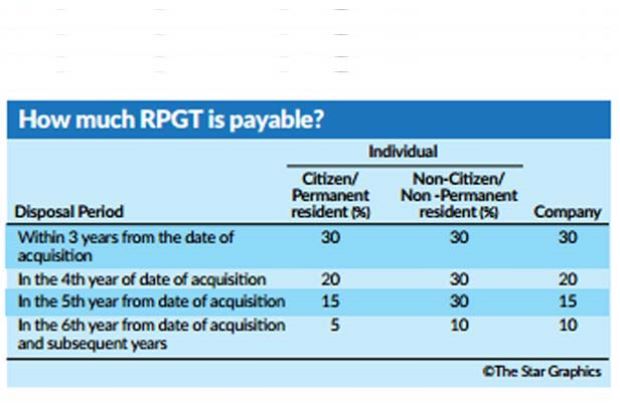
The RPGT rate imposed depends on the entity of the disposer (whether a permanent resident, individual citizen or company) and the period of ownership of the property.
Effective Jan 1, 2019, the RPGT has been increased for disposal of a property from the sixth year onwards. The table is a summary of the RPGT rates applicable to various entities, at the date of writing.
Net chargeable gain is the disposal price less the purchase price (that is the original price at which the seller bought the property) less permitted expenses such as certain renovation costs and incidental costs of acquisition and disposal including fees, commission or remuneration paid for the professional services of any surveyor, valuer, accountant, agent or solicitor.
When is RPGT payable?
The acquirer (buyer) is required to remit an amount equivalent to 3% (or 7%, if the disposer is a foreigner who is not a permanent resident) of the purchase price within 60 days of the date of disposal.
In this regard, the buyer’s solicitor usually retains 3% of the selling price from the deposit and pays it to the Inland Revenue Board no later than 60 days from the date of disposal but, often much earlier, as the seller will require the payment receipt to file his own returns.
The Inland Revenue Board will refund any excess paid or require the disposer to pay any shortfall.
The remittance of 3% or 7% need not be made if the disposal is not liable to RPGT.
RPGT forms
Both the disposer and the acquirer are required to complete and file RPGT returns within 60 days from the date of disposal (often, this is the date of the sale and purchase agreement or, if the state authority’s consent is required for transfer of the property, then it is the date of the letter of consent from the government).
The disposer is required to complete and submit form CKHT 1A and the acquirer, form CKHT 2A to the Inland Revenue Board’s branch where the disposer’s tax file is maintained, together with the relevant supporting documents.
If the disposer is not liable for RPGT, he will also have to submit form CKHT 3 and forward a copy to the acquirer so that the acquirer can submit it together with his returns.
If a disposer or acquirer, without reasonable excuse, fails to complete and submit the relevant CKHT form, he will be subjected to a fine not exceeding RM5,000 or to imprisonment for a term not exceeding 12 months or to both.
If no prosecution has been instituted in relation to the failure to file the CKHT form, the director-general may require that person to pay penalty of three times the amount of the tax which is payable for that year.
The disposer or acquirer may complete and file the forms with the Inland Revenue Board individually or seek assistance from solicitors at a fee prescribed by the Solicitors’ Remuneration Order 2005 or from tax consultants.
Are there any reliefs or exemptions?
A Malaysian citizen who disposes of a property after five years of ownership for a consideration sum of RM200,000 or below is exempted from RPGT.
For disposal of a property acquired before Jan 1, 2000, the market value as at Jan 1, 2000 will be taken as the acquisition price for purposes of calculating the RPGT, if any.
However, a Malaysian citizen or permanent resident is given a one-time exemption on gains from the disposal of one residential property in his lifetime.
Further, the disposal of property between husband and wife, parents and children, grandparents and grandchildren by way of gift will not attract RPGT if the disposer (including a personal representative) is a Malaysian citizen, as the disposer shall be deemed to have received no gain and suffered no loss on the disposal.
Last but not least, relief equivalent to RM10,000 or 10% of the net chargeable gain (whichever is greater) is also given to an individual.
Read more at https://www.thestar.com.my/business...-real-property-gains-tax/#WGlzlXJYvxkzzfDd.99
Last edited:


