
hartono
Legendary Member

- Messages
- 17,047
- Joined
- Jun 26, 2012
- Messages
- 17,047
- Reaction score
- 2
- Points
- 125
Minister says online child safety rules won't replace parents role
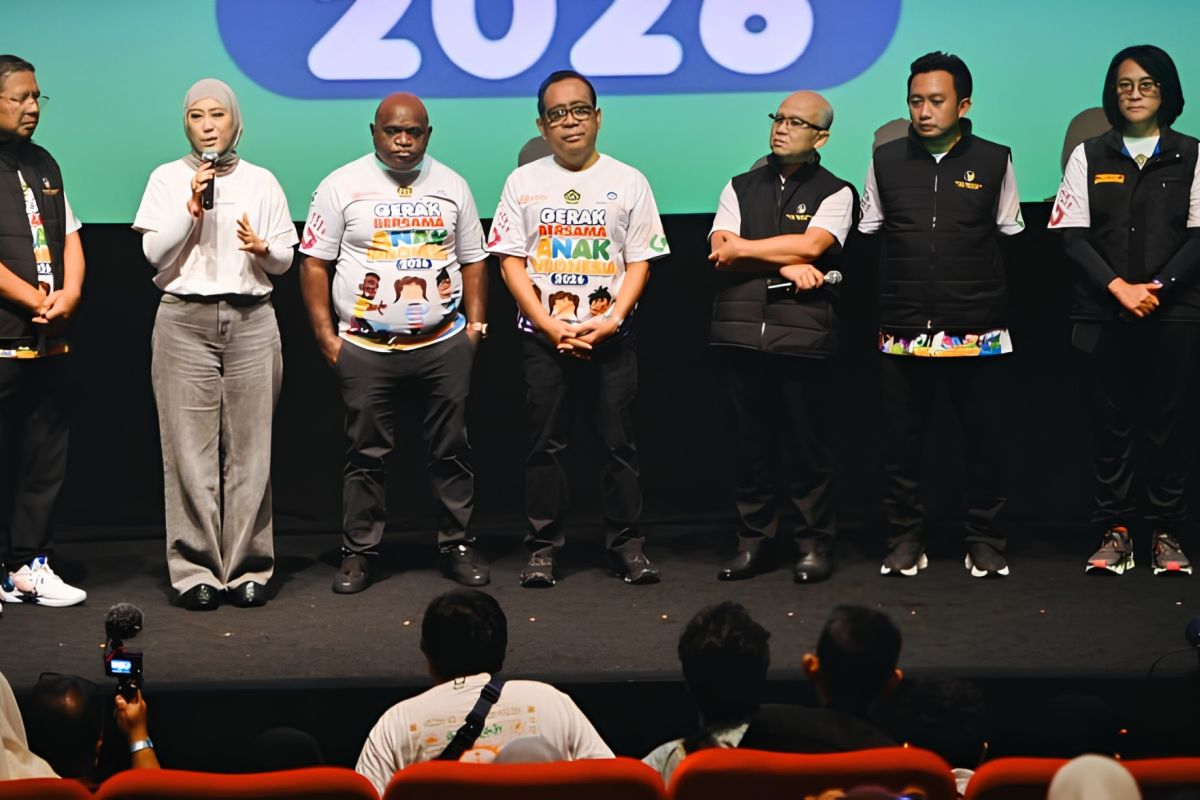
Indonesia's Minister of Communications and Digital Affairs Meutya Hafid (second from left) attends the Movement Together for Indonesia's Children event in Jakarta, Sunday (July 19, 2026). (ANTARA/HO-Ministry of Communications and Digital Affairs)
Jakarta (ANTARA) - Indonesia's government said its new child online safety regulation is designed to help parents protect children in the digital world, not replace their role in supervising and guiding internet use.
Communications and Digital Affairs Minister Meutya Hafid said Government Regulation No. 17 of 2025 on Electronic System Operations for Child Protection, known as PP TUNAS, limits children under 16 from creating accounts on high-risk social media platforms.
"This regulation helps parents, not replaces them," Hafid said in a statement on Sunday.
She said the regulation requires digital platform operators to apply a "safety by design" approach during service development, ensuring digital products and services are safer for children.
Hafid said the online environment should allow children to learn, express themselves, create and grow, but it also exposes them to risks including addiction, inappropriate content and threats to physical and mental health.
She urged parents to avoid giving children immediate access to high-risk social media platforms before they are ready.
"If you want to prevent children from being exposed before they are ready, help them delay creating their own accounts on high-risk social media," she said.
Hafid also encouraged parents to actively monitor children's technology use, saying government efforts to improve platform age verification would not succeed without family involvement.
She added that digital literacy remains essential for helping children use technology safely, critically, creatively and responsibly.
"Indonesia's children must not become victims of algorithms," Hafid said, emphasizing the need for digital skills, guidance and protection so children can use technology to support their future.
The regulation is part of Indonesia's broader effort to strengthen child protection online as internet access expands among younger users.
Under PP TUNAS, digital service providers are expected to improve safeguards, including age verification and risk management measures, to reduce children's exposure to harmful online content.
The government has said cooperation among regulators, technology companies, parents and communities is necessary to create a safer digital environment for children.
Hafid said protecting children online requires a shared commitment, with families remaining central to helping young people navigate the rapidly changing digital landscape.
She said technology should become a tool for education and creativity rather than a source of harm, provided children receive adequate protection and support.
Minister says online child safety rules won't replace parents role
Indonesia's government said its new child online safety regulation is designed to help parents protect children in the digital world, not replace their ...
 en.antaranews.com


