Characteristics
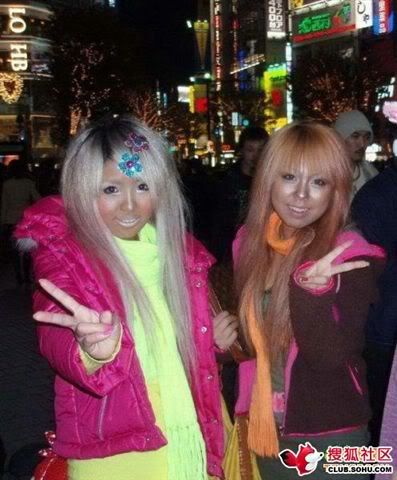
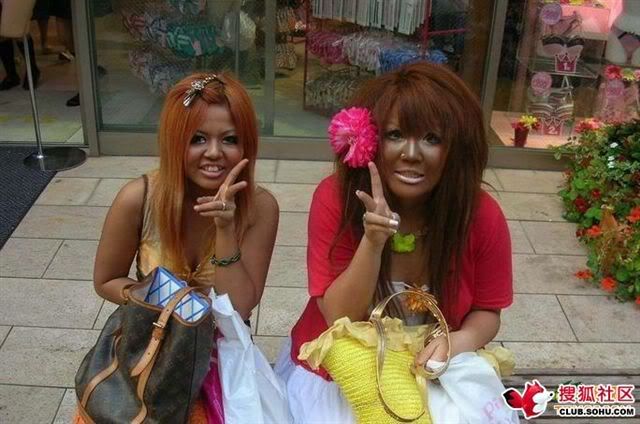
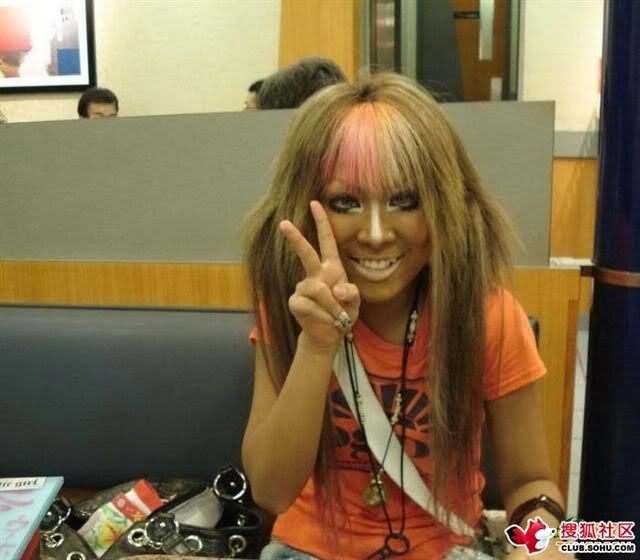
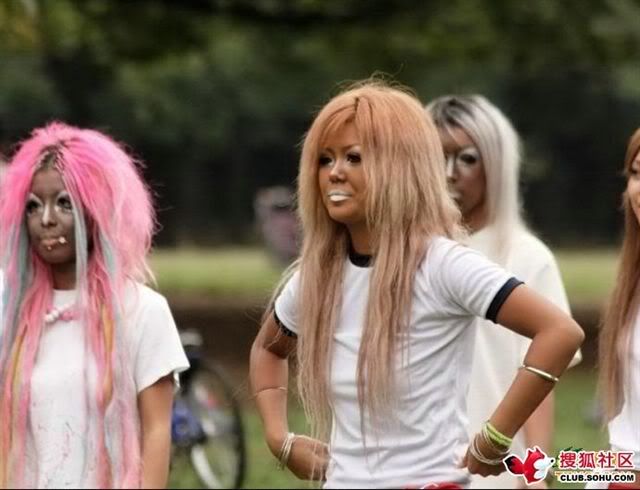
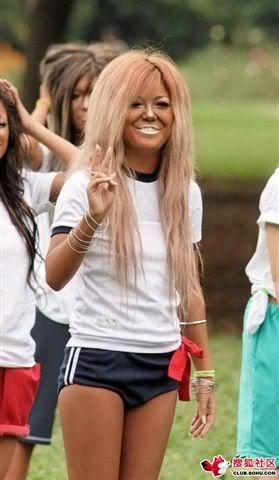
Ganguro appeared as a new fashion style in Japan in the early 1990s and is prevalent mostly among teenage girls and girls in their early 20's to this date. In ganguro fashion, a deep tan is combined with hair dyed in shades of orange to blonde, or a silver gray known as "high bleached". Black ink is used as eyeliner and white concealer is used as lipstick and eyeshadow. False eyelashes, plastic facial gems, and pearl powder are often added to this. Platform shoes and brightly-colored outfits complete the ganguro look. Also typical of ganguro fashion are tie-dyed sarongs, miniskirts, stickers on the face, and lots of bracelets, rings, and necklaces.
Ganguro falls into the larger subculture of gyaru (from English "gal"), a slang term used for various groups of young women, usually referring to overly childish or rebelious girls. Researchers in the field of Japanese studies believe that ganguro is a form of revenge against traditional Japanese society due to resentment of neglect, isolation, and constraint of Japanese society. This is their attempt at individuality, self-expression, and freedom, in open defiance of school standards and regulations.[1] The deep ganguro tan is in direct conflict with traditional Japanese ideas of feminine beauty. Due to this, as well as their use of slang, unconventional fashion sense, and perceived lack of hygiene, ganguro gals are almost always portrayed negatively by the Japanese media.
Fashion magazines like Egg and Cawaii magazine have had a direct influence on the ganguro. Other popular ganguro magazines include Popteen and Ego System. The ganguro culture has evolved its own synchronized dances, called Para Para. Participants do predetermined moves at the same time, usually as accompaniment to J-pop music. Para Para events are held by ganguro circles, and involve either going to clubs to perform Para Para or gathering to learn new dances.
One of the most famous early ganguro girls was known as Buriteri, nicknamed after the black soy sauce used to flavor yellowtail fish in teriyaki cooking. Egg made her a star by frequently featuring her in its pages during the height of the ganguro craze. After modeling and advertising for the Shibuya tanning salon "Blacky", social pressure and negative press convinced Buriteri to retire from the ganguro lifestyle.[2]
Yamanba and manba
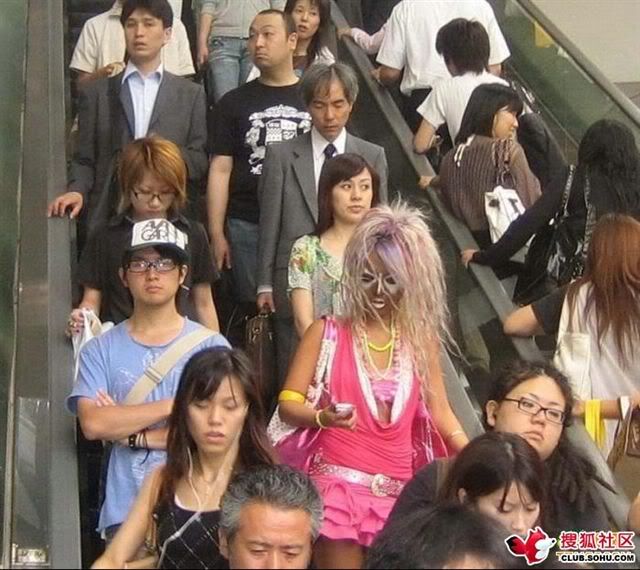
Yamanba (ヤマンバ, Yamanba?) and manba (マンバ, manba?) are terms often used to describe extreme practitioners of ganguro fashion. They feature darker tans and add white lipstick, pastel eye makeup, tiny metallic or glittery adhesives below the eyes, brightly-colored contact lenses, plastic dayglo-colored clothing, and incongruous accessories to the ganguro look. Some wear stuffed animals as decorations. The male equivalent is called a "center guy" (センター街, Sentaagai?, Center Street), a pun on the name of a pedestrian shopping street near Shibuya Station in Tokyo where yamanba and center guys are often seen.