
hartono
Legendary Member

- Messages
- 17,047
- Joined
- Jun 26, 2012
- Messages
- 17,047
- Reaction score
- 2
- Points
- 125
Indonesia's BRIN develops safer rubber rail crossing technology
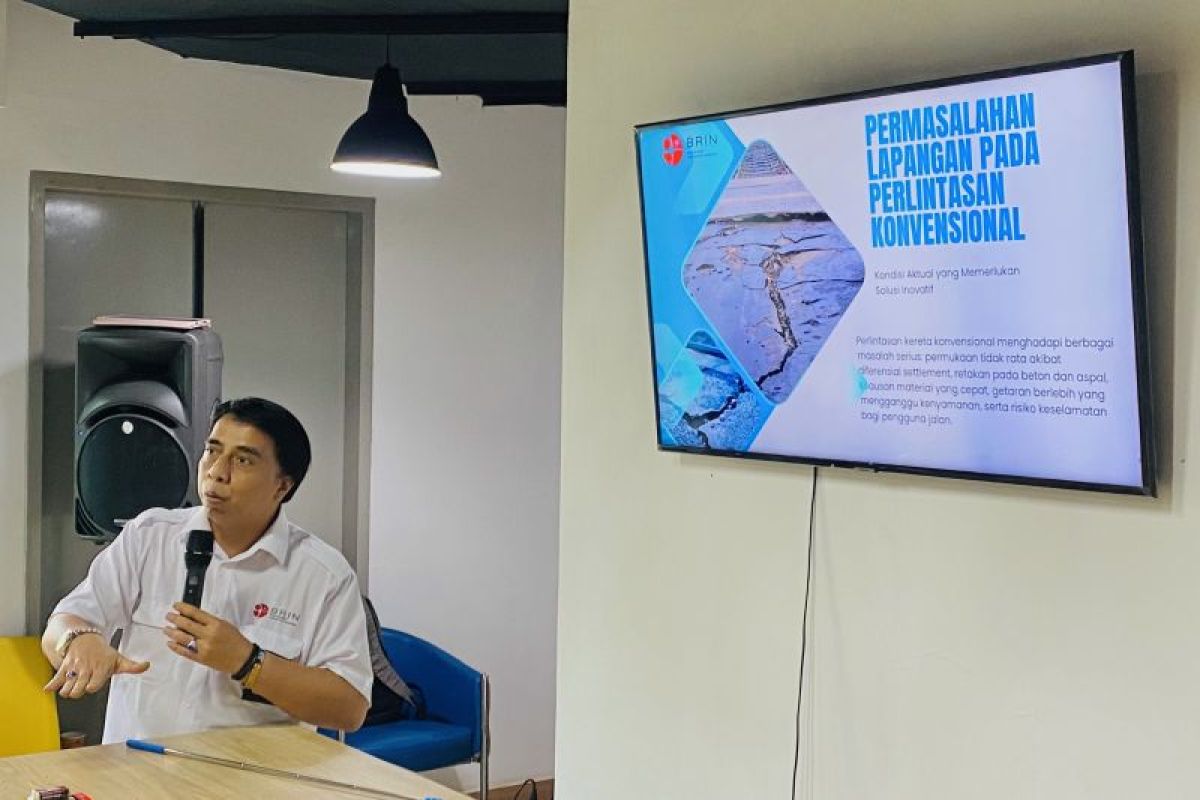
Ade Sholeh Hidayat, a researcher at the BRIN Composites and Biomaterials Research Center, introducing the innovative rubber crossing plate (RCP) material as a way to improve safety at railway level crossings. (ANTARA/HO-BRIN/rst)
This more elastic, durable, and safer infrastructure can significantly reduce accident risks while improving comfort for road users,Jakarta (ANTARA) - The National Research and Innovation Agency (BRIN) is offering an innovative rubber crossing plate (RCP) to improve the safety of railway level crossings, designed to replace conventional materials such as concrete and asphalt.
Researcher at the BRIN Composites and Biomaterials Research Center, Ade Sholeh Hidayat, stated that various accidents at level crossings are not only caused by human factors, but also by suboptimal technical conditions, such as uneven surfaces, slippery conditions, and high vibrations that cause vehicles to get stuck or lose control on the tracks.
"RCP offers a new approach that is more adaptive to dynamic loads and extreme environmental conditions, while also improving road user safety," he remarked in a statement on Saturday.
His team has developed RCP technology that is now ready for implementation, using a material formulated from natural rubber blended with compatibilizer additives and specialized fillers.
According to Hidayat, this combination of materials produces an elastic crossing plate with capability to absorb high vibrations, resistant to static and dynamic loads, and highly resistant to extreme weather, corrosion, and wear.
The precision and anti-slip surface of the RCP creates a flatter and more stable track, reducing the risk of vehicles skidding or getting stuck on the railway tracks, he explained. In addition, the material’s vibration-dampening capability improves vehicle stability while crossing and reduces surrounding noise levels.
“The RCP was developed through elastomer and mineral composite engineering with an optimized mixture ratio between rubber and additives. The product has undergone various tests, including static load, fatigue, vibration, noise, and environmental resistance tests involving UV exposure, water, and extreme temperatures,” he said.
Hidayat described the technology as strategic because it supports the downstream utilization of Indonesia’s natural rubber resources while reducing dependence on imported materials.
He added that the use of mineral waste as filler material also supports circular economy principles and transportation sector decarbonization targets.
According to him, if widely adopted by railway operator PT Kereta Api Indonesia, the RCP technology could become a new standard for railway level crossing infrastructure in Indonesia.
“This more elastic, durable, and safer infrastructure can significantly reduce accident risks while improving comfort for road users,” he concluded.
Indonesia's BRIN develops safer rubber rail crossing technology
The National Research and Innovation Agency (BRIN) is offering an innovative rubber crossing plate (RCP) to improve the safety of railway level crossings, ...
 en.antaranews.com


