
hartono
Legendary Member

- Messages
- 17,047
- Joined
- Jun 26, 2012
- Messages
- 17,047
- Reaction score
- 2
- Points
- 125
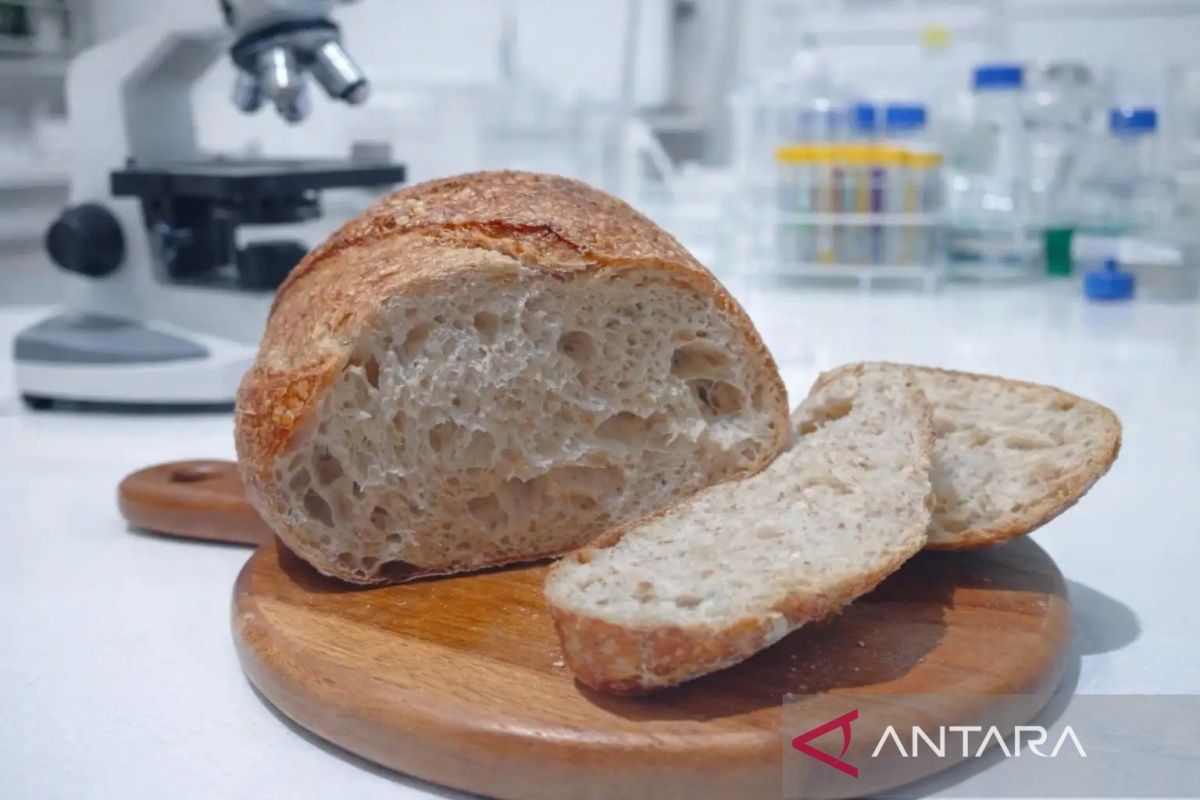
Innovative sourdough bread based on Gunungkidul local rice “Segreng Handayani” developed by National Research and Innovation Agency (BRIN) researcher Dyah Ayu Puspitasari. ANTARA/HO-BRIN
Jakarta (ANTARA) - A researcher from the National Research and Innovation Agency (BRIN) Center for Food Technology and Process Research (PRTPP), Dyah Ayu Puspitasari, has developed an innovative sourdough bread based on local Gunungkidul rice, “Segreng Handayani.”
In a statement received here on Saturday, she highlighted the potential of Segreng Handayani red rice as a sourdough base. The rice, grown in dry and challenging land conditions, is rich in starch, fiber, and bioactive compounds such as phenolics, flavonoids, and gamma-oryzanol.
“Through fermentation, these compounds become more easily absorbed by the body, or their bioavailability increases. The process also produces aroma compounds such as 4-vinyl guaiacol that give a distinctive character to the final product,” she said.
She added that red rice-based sourdough offers not only a unique taste but also functional benefits, including easier digestibility and better blood sugar stability.
Sourdough, she explained, is a natural fermentation system involving yeast and lactic acid bacteria.
“This fermentation process produces gases and acids that help form texture, flavor, and naturally improve product shelf life,” she said.
However, she noted challenges in developing non-wheat sourdough, especially with the absence of gluten, which provides bread structure. This results in a denser and moister texture compared to wheat bread.
She also said natural fermentation is influenced by temperature, time, and local microflora, making large-scale production consistency difficult. Despite this, she stressed that opportunities are still bright.
“Our local foods have extraordinary richness in taste, texture, and nutritional value. Through natural fermentation approaches, we not only preserve tradition but also present healthier and more sustainable food solutions,” Puspitasari said.
BRIN researcher develops sourdough from local red rice
A researcher from the National Research and Innovation Agency (BRIN) Center for Food Technology and Process Research (PRTPP), Dyah Ayu Puspitasari, has ...
 en.antaranews.com


