
hartono
Legendary Member

- Messages
- 17,047
- Joined
- Jun 26, 2012
- Messages
- 17,047
- Reaction score
- 2
- Points
- 125
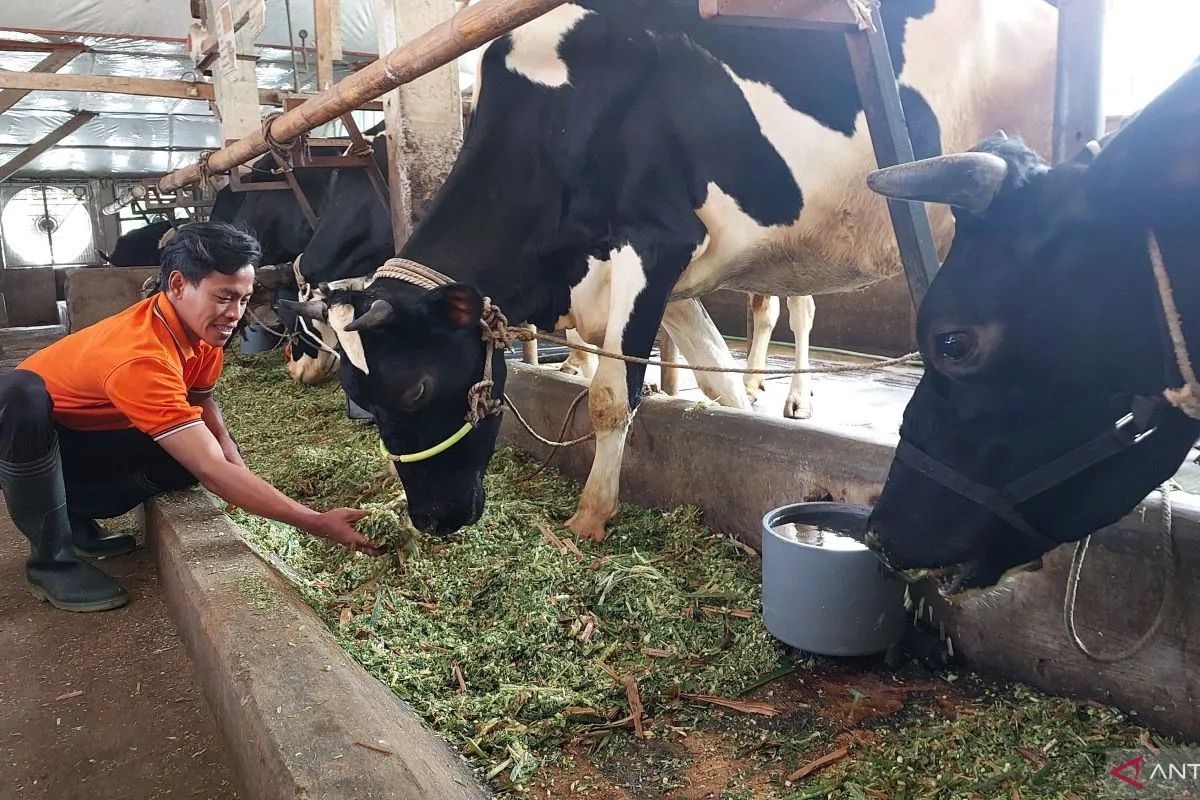
Illustration—A young livestock breeder manages a cattle ranch in Grobogan District, Central Java, on February 12, 2026. (ANTARA/Fitra Ashari)
Jakarta (ANTARA) - Indonesia's Ministry of Agriculture collaborated with the government of Denmark to strengthen national quality and safety assurance systems for animal feed, aiming to support farmers and boost the competitiveness of the country's livestock products.
The cooperation took the form of a capacity-building activity between a ministerial delegation and the Danish Veterinary, Food, Agriculture, and Fisheries Agency in Copenhagen on February 2–6, according to a statement released in Jakarta on Wednesday.
"This initiative is of high importance because the quality of animal feed determines livestock productivity, production cost efficiency, and the safety of resulting animal-derived food," said delegation leader Sapta, who serves at the Directorate of Animal Feed.
Indonesia primarily intended the activity to identify and learn effective measures to modernize its feed oversight system while pursuing transparency and promoting a risk-based approach.
Sapta noted that the ministry considers it important to take notes from international partners’ best practices as a reference for perfecting national regulations.
"We will replicate such practices while tailoring them to the needs and characteristics of Indonesia's livestock subsector," the official remarked, stressing the need to enhance monitoring to shield breeders from losses caused by low-quality or contaminated feed.
The delegation leader emphasized that stronger quality and safety assurance could contribute to improving the livestock industry's performance, reducing disease risks, enhancing feed conversion efficiency, and boosting the production of livestock-derived commodities, such as meat and milk.
Sapta highlighted that the ministry is also working to revise a 2017 ministerial regulation on animal feed, draft a policy paper on feed safety, establish a feed product certification body, and develop a national monitoring system for quality and safety.
These efforts align with a program to enhance laboratory capacity in detecting mycotoxins, heavy metals, pesticide residues, and antibiotics in feed.
Indonesia studies Denmark's model to upgrade animal feed safety
Indonesia's Ministry of Agriculture collaborated with the government of Denmark to strengthen national quality and safety assurance systems for animal ...
 en.antaranews.com

