
hartono
Legendary Member

- Messages
- 17,047
- Joined
- Jun 26, 2012
- Messages
- 17,047
- Reaction score
- 2
- Points
- 125
Indonesia pushes for safer, evidence-based stem cell therapy
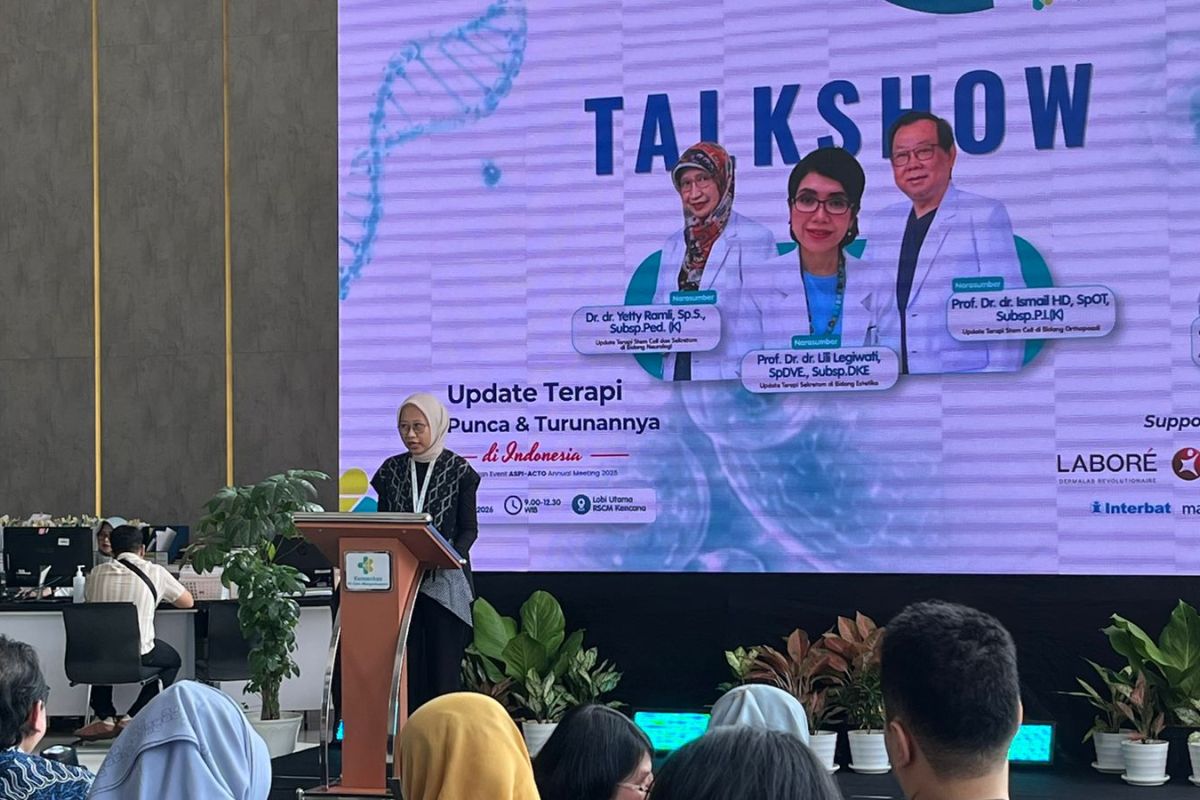
Regenerative Therapy and Medical Innovation Working Group Head Sri Nuraini, who read out remarks by Referral Health Service Development Director at the Health Ministry Yanti Herman, at the "Update on Stem Cell Therapy and Its Derivatives in Indonesia" event at RSCM Kencana, Jakarta, Saturday (August 29, 2026). ANTARA/Sri Dewi Larasati.
Jakarta (ANTARA) - The Health Ministry's Director of Referral Health Service Development, Yanti Herman, has encouraged the development of stem cell therapy into a safe medical service that provides real benefits to patients.
At the "Update on Stem Cell Therapy and Its Derivatives in Indonesia" event here on Saturday, Herman's remarks were read out by Sri Nuraini, Head of the Regenerative Therapy and Medical Innovation Working Group.
"Stem cell therapy and its derivative products, such as secretome, exosomes, and extracellular vesicles, offer hope for patients with various diseases that were previously difficult to treat, including in orthopedics, aesthetics, neurology, and other fields," Herman said in her statement.
She added that the Health Ministry emphasized three key points in the discussion, including the need for the public to have accurate information about stem cell-based therapies, including their proven benefits, appropriate indications, potential risks, and limitations.
"Public education is very important so that people can distinguish between promising innovations and therapy claims that are not yet supported by adequate scientific evidence," she said.
In addition, such therapies must be administered by competent medical personnel using products that meet established requirements and are produced by licensed stem cell processing laboratories, with traceable services and proper monitoring.
"Stem cell therapy is not a service that can be provided without strong clinical governance and oversight," she said.
The Health Ministry also called for the strengthening of the regenerative therapy ecosystem, particularly stem cell therapy, through regulatory development, research hospitals, expanded laboratory capacity, and stronger systems for recording and monitoring patient outcomes.
According to Herman, the goal of developing stem cell therapy is not merely to introduce new technology but to ensure that it can be translated into safe, high-quality, evidence-based services that provide real benefits to patients.
Stem cell services cover a series of medical procedures, from the collection, storage, and processing of cells to the administration of therapy from donor to recipient. Such therapies may be autologous, using the patient's own cells, or allogeneic, using cells from public donors, and must meet quality, safety, and efficacy standards.
Indonesia pushes for safer, evidence-based stem cell therapy
The Health Ministry's Director of Referral Health Service Development, Yanti Herman, has encouraged the development of stem cell therapy into a safe ...
 en.antaranews.com

