
hartono
Legendary Member

- Messages
- 17,047
- Joined
- Jun 26, 2012
- Messages
- 17,047
- Reaction score
- 2
- Points
- 125
Environment Ministry drafts producer-funded waste management rule
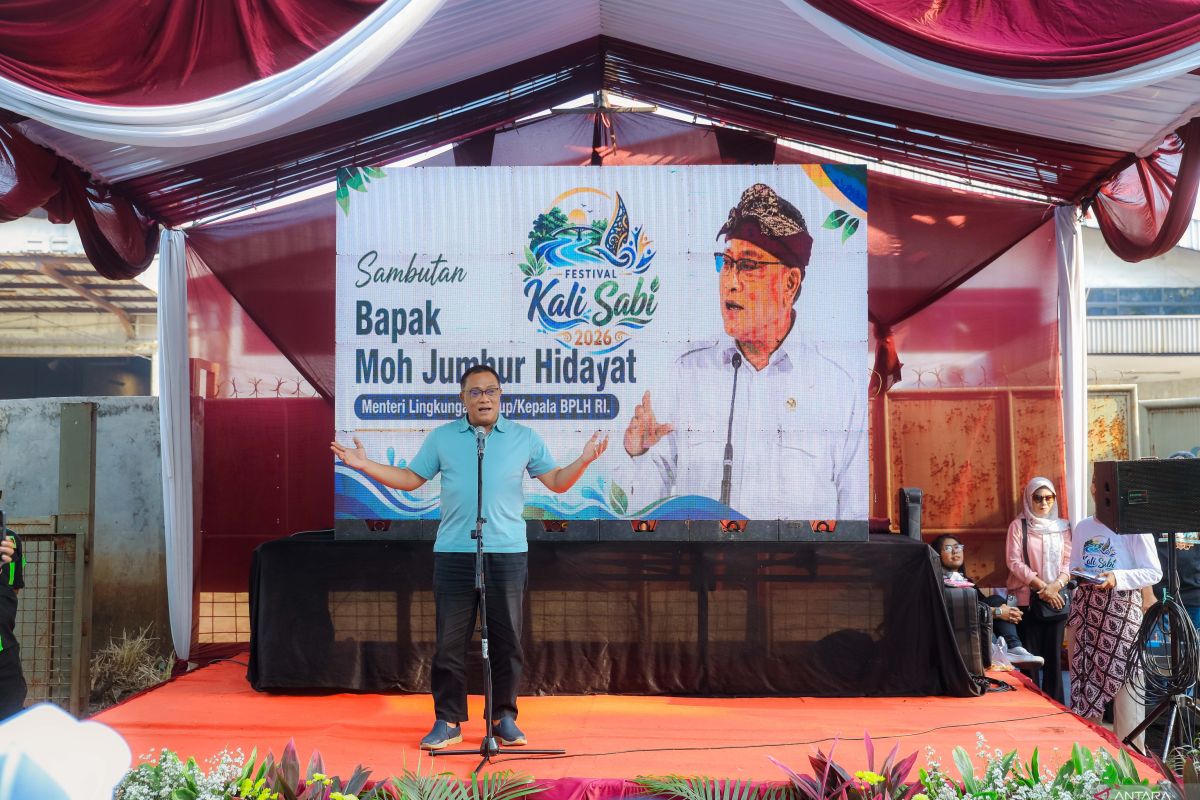
Environment Minister Muhammad Jumhur Hidayat attended the Kali Sabi Festival in Tangerang City on Sunday (July 12, 2026). ANTARA/Irfan/rst
Tangerang (ANTARA) - The Ministry of Environment is drafting a Ministerial Regulation on Extended Producer Responsibility (EPR), which will require producers to take greater responsibility for managing the plastic packaging waste generated by their products.
Minister of Environment Muhammad Jumhur Hidayat said the policy will be implemented through the establishment of a Packaging Recovery Organization (PRO) as a collaborative waste management institution.
This regulation is intended as a strategic measure to ensure sustainable plastic waste management, with funding provided by the industrial sector rather than the State Budget (APBN).
"The ministerial regulation on EPR extends the responsibility of producers who produce plastic waste. Large companies have expressed their readiness to implement this policy," he remarked on Sunday.
According to him, nearly 10,000 large factories in Indonesia will take part in the scheme by allocating part of their budgets to manage the packaging waste generated by their products. The funds will be managed through a PRO, which may be established by foundations, communities, or environmental organizations.
"Organizations such as environmental foundations can become PROs. They have a substantial budget. This will also create green jobs in various regions," Hidayat noted.
The PRO funding mechanism is deemed sustainable as it is supported by continuous contributions from producers as long as their businesses remain operational. The government functions only as the regulator by setting governance and implementation rules, while the funds are administered by industry players in accordance with the regulations.
"As long as the factories are operating, funding for waste management will continue, so the management organizations will have certainty in running their programs," the minister further explained.
He added that PRO funds can be used for various waste reduction activities, from door-to-door public education and the provision of waste sorting facilities to behavioral change campaigns to discourage people from throwing waste into rivers.
Hidayat said effective waste management depends on raising public awareness alongside the provision of adequate facilities. As an example, he cited a community in Bali that transformed a polluted river into a clean and productive area through public education, which also spurred the growth of economic activity along the river.
"We hope this approach will be replicated across the country. When communities take care of their rivers, they create a cleaner environment while generating economic benefits," he remarked.
Environment Ministry drafts producer-funded waste management rule
The Ministry of Environment is drafting a Ministerial Regulation on Extended Producer Responsibility (EPR), which will require producers to take greater ...
 en.antaranews.com

