TifiaFX
Fun Poster
- Messages
- 693
- Joined
- Mar 14, 2017
- Messages
- 693
- Reaction score
- 0
- Points
- 20
AUD/USD: the pair remains under pressure
22/01/2020
Last year, the RBA cut interest rates three times amid a trade conflict between the US and China and weak growth in the Australian economy. In December, the RBA left the key interest rate unchanged, at a record low of 0.75%. Now, labor market conditions, household consumption growth rates, and company investment are key to the February meeting of the RBA, after the US and China entered into a “first phase” trade agreement last week.
RBA managing director Philip Lowe in November admitted the possibility of further stimulating the Australian economy after the rate drops below 0.25%. In the Australian economy, consumer demand is now declining and in recession. Personal consumption accounts for almost 60% of GDP, so the RBA always focuses on spending in stores. Without rapid growth in personal consumption, employment in the labor market will slow down, and the investment market will cool.
On Wednesday, Westpac reported a decline in consumer confidence in the country. The consumer confidence index fell in January by -1.8% (against the forecast of -0.8% and after falling by -1.9% in December).
The Australian dollar continued to decline after the publication of this index at the beginning of today's trading day. A day earlier, the Australian dollar was pressured by information about the outbreak of coronavirus in China.
The Australian economy is expected to create +15,000 new jobs in December, while unemployment remains at 5.2%. Data from the Australian labor market will be released Thursday at 00:30 (GMT). Weak GDP growth, low personal consumption and weak retail sales reinforce expectations of further interest rate cuts at a meeting of the Reserve Bank of Australia on February 4, which will put downward pressure on AUD.
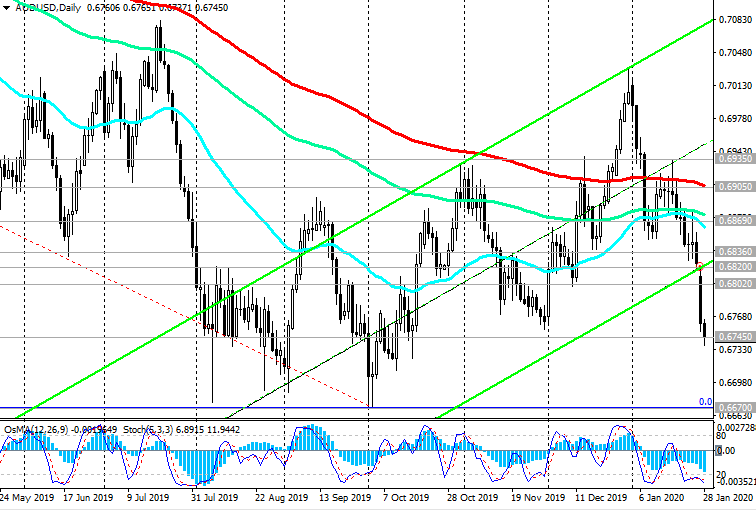
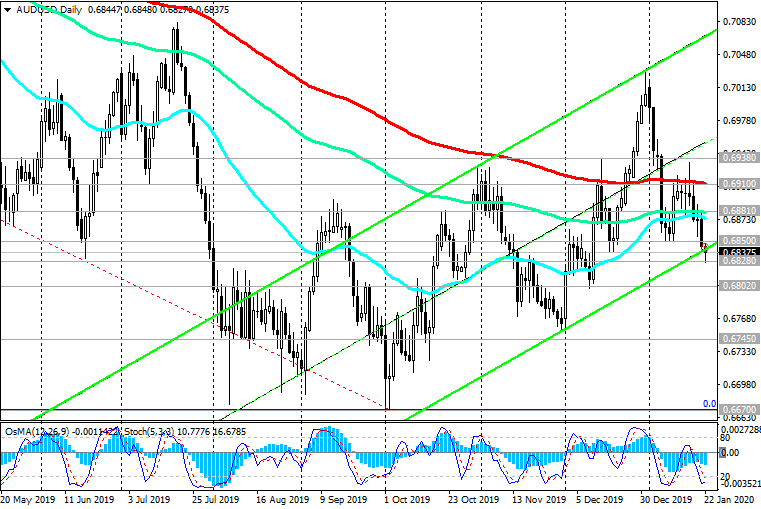
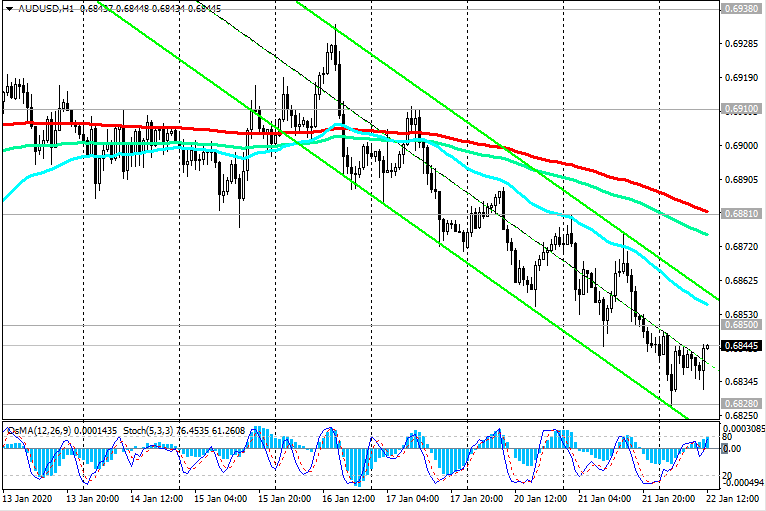
On Wednesday, AUD / USD is trading below the key resistance level of 0.6910 (ЕМА200 on the daily chart) and below the important resistance level of 0.6881 (ЕМА200 on the 1-hour and 4-hour charts, ЕМА144 on the daily chart).
A breakdown of the local support level of 0.6828 (today's and monthly lows) will confirm a downward trend and a return to the global downtrend, in which AUD / USD has been since August 2011.
A signal for the development of an alternative scenario could be a breakdown of the local resistance level of 0.6850. However, the possible growth of AUD / USD is likely to be limited by the resistance level of 0.6910 (ЕМА200 on the daily chart).
Support Levels: 0.6828, 0.6802, 0.6745, 0.6700, 0.6670, 0.6600, 0.6300
Resistance Levels: 0.6850, 0.6881, 0.6910, 0.6938
Trading Scenarios
Sell Stop 0.6825. Stop-Loss 0.6860. Take-Profit 0.6802, 0.6745, 0.6700, 0.6670, 0.6600, 0.6300
Buy Stop 0.6860. Stop-Loss 0.6825. Take-Profit 0.6881, 0.6910
*) For up-to-date and detailed analytics and news on the forex market visit Tifia Forex Broker website tifia.com
22/01/2020
Last year, the RBA cut interest rates three times amid a trade conflict between the US and China and weak growth in the Australian economy. In December, the RBA left the key interest rate unchanged, at a record low of 0.75%. Now, labor market conditions, household consumption growth rates, and company investment are key to the February meeting of the RBA, after the US and China entered into a “first phase” trade agreement last week.
RBA managing director Philip Lowe in November admitted the possibility of further stimulating the Australian economy after the rate drops below 0.25%. In the Australian economy, consumer demand is now declining and in recession. Personal consumption accounts for almost 60% of GDP, so the RBA always focuses on spending in stores. Without rapid growth in personal consumption, employment in the labor market will slow down, and the investment market will cool.
On Wednesday, Westpac reported a decline in consumer confidence in the country. The consumer confidence index fell in January by -1.8% (against the forecast of -0.8% and after falling by -1.9% in December).
The Australian dollar continued to decline after the publication of this index at the beginning of today's trading day. A day earlier, the Australian dollar was pressured by information about the outbreak of coronavirus in China.
The Australian economy is expected to create +15,000 new jobs in December, while unemployment remains at 5.2%. Data from the Australian labor market will be released Thursday at 00:30 (GMT). Weak GDP growth, low personal consumption and weak retail sales reinforce expectations of further interest rate cuts at a meeting of the Reserve Bank of Australia on February 4, which will put downward pressure on AUD.
On Wednesday, AUD / USD is trading below the key resistance level of 0.6910 (ЕМА200 on the daily chart) and below the important resistance level of 0.6881 (ЕМА200 on the 1-hour and 4-hour charts, ЕМА144 on the daily chart).
A breakdown of the local support level of 0.6828 (today's and monthly lows) will confirm a downward trend and a return to the global downtrend, in which AUD / USD has been since August 2011.
A signal for the development of an alternative scenario could be a breakdown of the local resistance level of 0.6850. However, the possible growth of AUD / USD is likely to be limited by the resistance level of 0.6910 (ЕМА200 on the daily chart).
Support Levels: 0.6828, 0.6802, 0.6745, 0.6700, 0.6670, 0.6600, 0.6300
Resistance Levels: 0.6850, 0.6881, 0.6910, 0.6938
Trading Scenarios
Sell Stop 0.6825. Stop-Loss 0.6860. Take-Profit 0.6802, 0.6745, 0.6700, 0.6670, 0.6600, 0.6300
Buy Stop 0.6860. Stop-Loss 0.6825. Take-Profit 0.6881, 0.6910
*) For up-to-date and detailed analytics and news on the forex market visit Tifia Forex Broker website tifia.com