Jatuh Cinta
Junior Member
- Messages
- 54
- Joined
- May 30, 2022
- Messages
- 54
- Reaction score
- 0
- Points
- 6
The dollar index is making new highs, rising to 107.6 on Friday afternoon, and by the start of active trading in Europe, trading at 107.45. This is the highest rate since October 2002. The dollar index has added about 20% to its 2021 low.The strengthening dollar carries positive secondary effects for the US, from reducing inflationary pressures through imports to ending the talk of dollar weakness that has been prevalent since late 2020.
Nevertheless, central bankers are not welcome too sharp currency fluctuations in either direction, although they blatantly ignore the absolute value of the exchange rate against another currency or trade-weighted basket.
So far, the Fed has paid little attention to dollar appreciation, but it is worth being prepared that this approach would change in the coming days and weeks to avoid causing an uncontrolled rise in the dollar that could prove devastating.
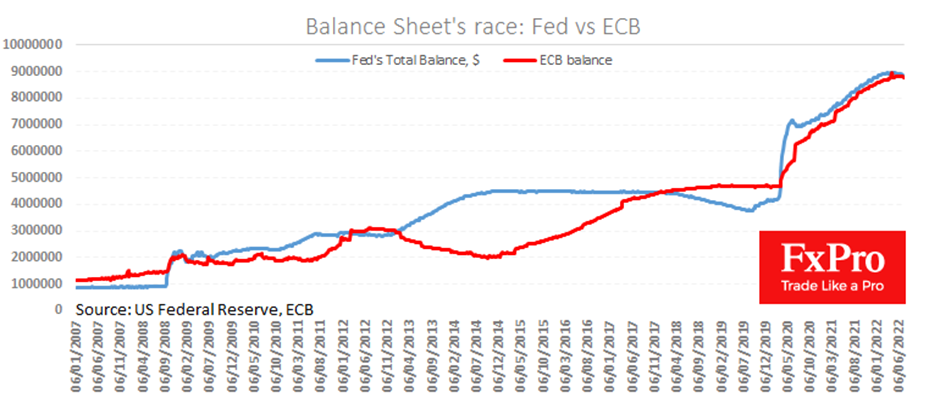
In the past fortnight, the Fed has begun selling assets off its balance sheet, reducing it by $42.5B. The ECB stopped net buying in July, but active Fed-like selling is a matter of uncertainty.
Other key central banks are also a step or two behind the Fed, or moving slower, from full-blown QE from the Bank of Japan to the Reserve Bank of Australia, which raised its rate by 50 points against +75 from the Fed last month and forecasts another such hike at the end of July.
Nevertheless, central bankers are not welcome too sharp currency fluctuations in either direction, although they blatantly ignore the absolute value of the exchange rate against another currency or trade-weighted basket.
So far, the Fed has paid little attention to dollar appreciation, but it is worth being prepared that this approach would change in the coming days and weeks to avoid causing an uncontrolled rise in the dollar that could prove devastating.
In the past fortnight, the Fed has begun selling assets off its balance sheet, reducing it by $42.5B. The ECB stopped net buying in July, but active Fed-like selling is a matter of uncertainty.
Other key central banks are also a step or two behind the Fed, or moving slower, from full-blown QE from the Bank of Japan to the Reserve Bank of Australia, which raised its rate by 50 points against +75 from the Fed last month and forecasts another such hike at the end of July.


