
hartono
Legendary Member

- Messages
- 17,047
- Joined
- Jun 26, 2012
- Messages
- 17,047
- Reaction score
- 2
- Points
- 125
Ministry promotes downstreaming to boost forestry product value
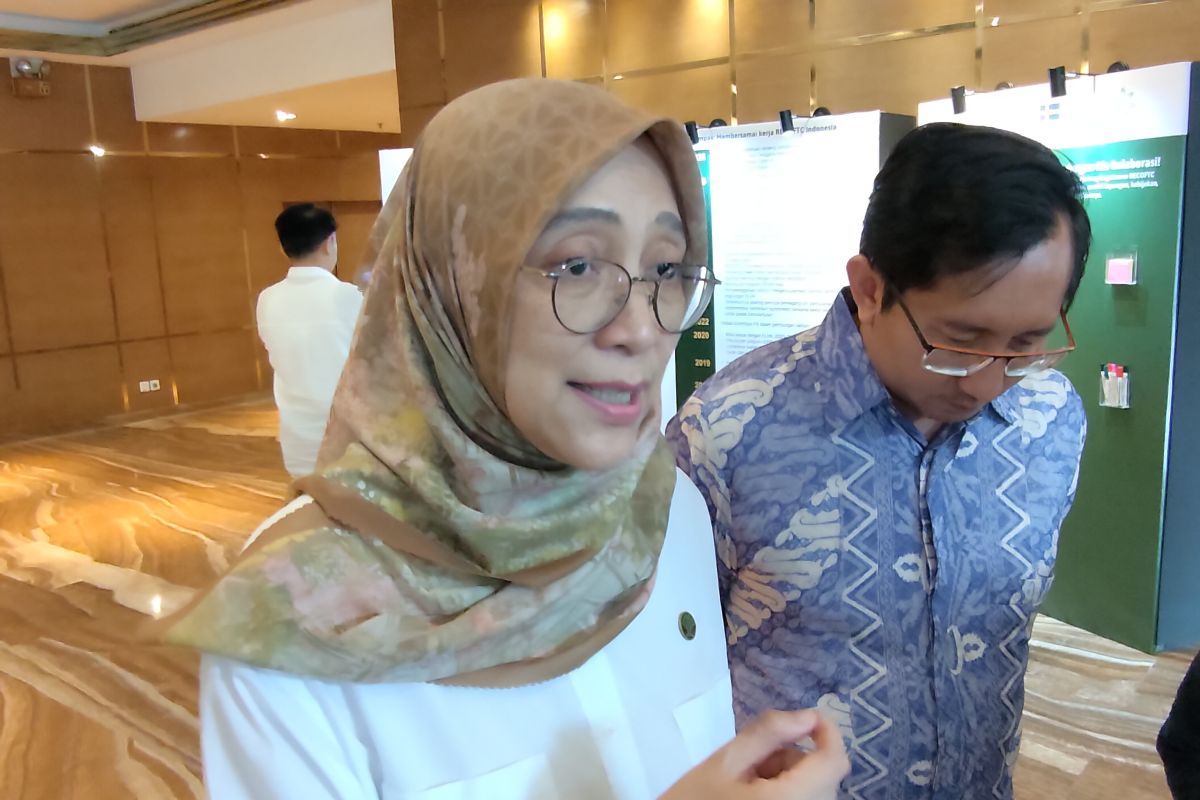
Director General of Social Forestry at the Ministry of Forestry Catur Endah Prasetiani (left) speaks to journalists after the opening of the “Reflection and Hope: RECOFTC Indonesia Experience in Strengthening Community-Based Forest Capacity and Partnerships” event in Jakarta on Monday (June 29, 2026). (ANTARA/Aria Ananda)
Jakarta (ANTARA) - The Ministry of Forestry said it pushes for downstream processing of social forestry commodities to increase product value, expand market access, and improve the welfare of communities living in and around forest areas.
Director General of Social Forestry at the ministry, Catur Endah Prasetiani, said social forestry has now entered a new phase, no longer focused solely on expanding access rights but ensuring that such access develops into productive, value-added, and competitive enterprises.
“The transformation we are promoting is from access to business, from productivity to value addition, and from area management to building a community economic ecosystem,” Prasetiani said here on Monday.
She said downstream processing is an important part of developing forest community economies, as it transforms raw commodities into processed products with higher economic value.
According to her, non-timber forest products (NTFPs) hold significant economic potential.
Therefore, the ministry is also focusing on developing 10 priority social forestry commodities, namely coffee, cocoa, sugar palm, vanilla, coconut, pepper, nutmeg, cashew, candlenut, and clove.
“The goal is not only to increase production, but to create a value chain capable of producing high-quality, competitive products with broad market access,” she said.
The downstreaming of social forestry commodities is carried out through several stages, from production, processing, packaging, certification, and marketing, to partnerships.
Ministry data show that Indonesia’s non-timber forest products reached more than 850,000 tons in 2024, with a forest resource provision value (PSDH) of Rp36.52 billion.
She explained that commodity development is being strengthened through the Smart Agroforestry approach, which integrates forestry, plantation, and agricultural crops with technological innovation and climate change adaptation.
As of May 2026, social forestry coverage had reached 8.35 million hectares through 11,226 decrees granting management access to 1.43 million households, and also supported by 3,052 social forestry facilitators across Indonesia.
Ministry promotes downstreaming to boost forestry product value
The Ministry of Forestry said it pushes for downstream processing of social forestry commodities to increase product value, expand market access, and improve ...
 en.antaranews.com


