BTC USD 82,636.4 Gold USD 4,172.82
Time now: Jun 1, 12:00 AM

Konspirasi Arab Terhadap Islam

Nabi Ibrahim telah dipilih oleh Allah untuk menjadi Imam kepada kesemua manusia (2:124) - (ini termasuklah orang-orang Melayu -sebab mereka pun manusia juga). Allah jadikan dalam sistemNya bekalan atau providence sebagai sumber ketenteraman untuk manusia. Mereka diminta jadikan kedudukan Ibrahin yang telah berkomited mensucikan sistem Allah dengan anaknya Ismail untuk segolongan manusia yang bertekun, dan yang merendahkan diri, dan mereka yang bersetuju. (2:125).

Komitmen yang jelas oleh Ibrahim mensucikan sistem Allah ialah - bilamana dia musnah berhala-berhala kaumnya yang dijadikan ikon sebagai object perantaran untuk mereka menjalankan aktiviti-aktiviti ritual. Ibrahim faham - manusia sebagai hamba Allah harus mengabdikan diri mereka hanya kepada Allah yang ghaib - tanpa sebarang simbolik yang mempunyai reka-bentuk diperbuat dari batu, kayu, besi, atau bahan-bahan lain yang dicipta oleh Allah. Selepas dia musnahkan berhala-berhala kaumnya dia bertanya kepada mereka:

"Dia bertanya, "Macam mana kamu boleh abdikan diri kamu kepada apa yang kamu ukir sendiri - sedangkan Allah yang menciptakan kamu dan segala apa yang kamu buat?" (37: 95-96)

selanjutnya.
 
click here

kunci memahami dan mengambil manfaat daripada al-Quran

Bahawa sesungguhnya itu ialah Al-Quran yang mulia
Yang tersimpan dalam Kitab yang CUKUP TERPELIHARA
Yang TIDAK DISENTUH melainkan oleh makhluk-makhluk yang DIAKUI bersih suci

[Al-Waqi’ah:77-79]

(tafsiran diputarbelitkan ulama ialah kena ada wudhuk...adoih, aper ni? :)) )


apa itu bersih?

Kecuali hamba-hamba Allah yang dibersihkan dari sebarang syirik
[As-Saffat:40]

Dengan yang demikian, bagaimana fikiranmu
terhadap orang yang menjadikan hawa nafsunya: tuhan yang dipatuhinya

[Al-Jathiyah:23]


apa itu kekotoran?

Wahai orang-orang yang beriman!
Sesungguhnya (kepercayaan) orang-orang kafir musyrik itu najis

[At-Taubah:28]

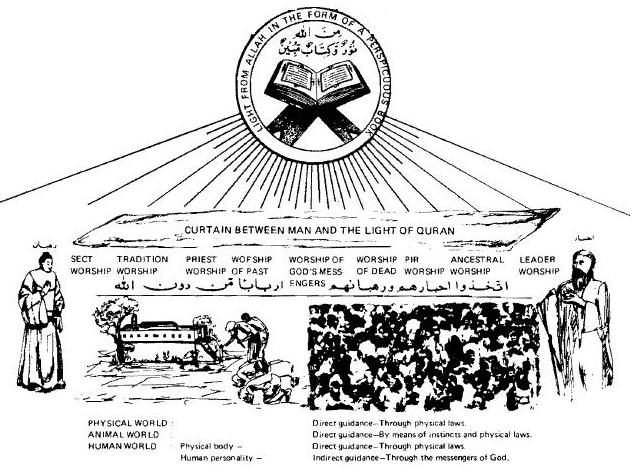
curtail.JPG


so.. selagi diri "tak bersih daripada segala bentuk syirik"

mustahil seseorang itu dapat memahami dan mengambil manfaat sebenar al-Quran...

fahaman mereka pasti berselisih dengan semua ayat-ayat Allah...

itulah Sunnatullah atau ketetapan Allah yang tidak akan berubah

Kerana engkau tidak sekali-kali akan mendapati sebarang perubahan bagi ” Sunnatullah ”
dan engkau tidak sekali-kali akan mendapati sebarang penukaran bagi perjalanan ” Sunnatullah ” itu.

[Fatir:43]

“Sunnatullah” yang telah berlaku semenjak dahulu lagi
dan engkau tidak akan mendapati sebarang perubahan bagi cara dan peraturan Allah itu

[Al-Fath:23]

Yang demikian adalah menurut “Sunnatullah”
dan engkau tidak sekali-kali akan mendapati sebarang perubahan bagi “Sunnatullah” itu

[Al-Ahzab:62]


kesan akhir ialah mereka tidak akan menemui jalan yang benar

Mereka pekak, bisu dan buta; dengan keadaan itu mereka tidak dapat kembali (kepada kebenaran)
[al-Baqarah:18]


kerana apa semua ni terjadi?

ini kerana al-Quran itu adalah "CUKUP TERPELIHARA"

iaitu "maksud dan manfaat sebenar dari al-Quran" itu adalah cukup terpelihara...

"TIDAK DISENTUH" ...

iaitu maksud ayat al-Quran "TIDAK DIFAHAMI" oleh orang yang amalan mereka kotor dengan najis syirik..

mereka tidak dapat memahami ayat al-Quran mengikut perspektif sebenar

mereka akan melihat ayat Allah adalah lemah dan cacat, serta memerlukan kitab-kitab tambahan...

memerlukan "kitab manusia" untuk melengkapkan "Kitab Tuhan Sekalian Alam" .. "Tuhan Maha Pencipta, Maha Bijaksana" :))

Sebenarnya! (Ayat-ayat Kami itu tidak ada cacatnya)
bahkan mata hati mereka telah diselaputi kekotoran

dengan sebab yang mereka kerjakan.

[Al-Mutaffifeen:14]

contoh .. Allah kata al-Quran itu mudah difahami dan ambil pengajaran...

Dan demi sesungguhnya!
Kami telah mudahkan Al-Quran untuk menjadi peringatan dan pengajaran
maka adakah sesiapa yang mahu mengambil peringatan dan pelajaran?

[17, 22, 32, 40:Al-Qamar] <--- ayat sama berulang 4x

orang yang tidak dibersihkan daripada segala bentuk syirik tidak akan dapat memahami dan beriman dengan ayat di atas ...

dan akhirnya... akan mencari solution ke arah kitab selain al-Quran dan manusia pendusta dan kafir..

padahal mereka sepatutnya bertindak menyucikan dirinya daripada syirik dan faham mengikut ayat tu sendiri....

Tidakkah cukup bagi mereka bahawa Kami telah menurunkan kepadamu Al-Quran yang dibacakan kepada mereka?
[Al-’Ankabut: 51]

oleh itu mustahil mereka akan tergolong dalam "golongan yang beriman dengan ayat Allah"

dan mereka menjadi semakin jauh menyekutukan Allah..

so.. kena selalu membersihkan fahaman dan amalan kita daripada "najis syirik"...

bacaan tambahan
 
"CUKUP TERPELIHARA" ?

... janji Allah tu!!!!


kalau berani.. teruskan amalan syirik memuja ulama haprak dan thaghut..

confirm nkorang tak rasa pun diri sebagai sesat sampai mati..

in fact, takda keraguan langsung dan rasa dah confirm diri akan masuk syurga... confirm sangat2.. rasa mulia jerr setiap masa

hanya bila tercabut nyawa..

baru tahu diri dah silap jalan..

dan macam al-Quran cakap ... cakap.. dah cakap punn... iaitu dah terlambatttttt.... :))

Biarkanlah Aku sahaja dengan orang yang mendustakan keterangan Al-Quran ini
Kami akan menarik mereka sedikit demi sedikit (ke jurang kebinasaan)
dari arah yang mereka tidak mengetahuinya
Dan Aku akan melanjutkan tempoh untuk mereka
sesungguhnya rancangan sulitKu amatlah kuat kukuh (rujuk sini)

[Al-Qalam:45]

syirik....

curtail.JPG
 
Last edited:
contoh orang-orang arab memesongkan maksud ayat ayat al quran.
bila berlakunya hari raya haji terbesar itu?
---------------------------------

Dan inilah perisytiharan dari Allah dan RasulNya
kepada umat manusia, (diisytiharkan)
pada Hari Raya Haji yang terbesar,

bahawa sesungguhnya Allah dan RasulNya
memutuskan tanggungjawab terhadap orang-orang musyrik;
oleh itu jika kamu (wahai kaum musyrik) bertaubat
(dari kufur) maka yang demikian adalah baik bagi kamu;
dan jika kamu berpaling (ingkar),
maka ketahuilah sesungguhnya kamu tidak akan dapat
melepaskan diri dari (azab seksa) Allah.
Dan khabarkanlah (wahai Muhammad) kepada orang-orang kafir
(bahawa mereka akan ditimpakan)
dengan azab yang tidak terperi sakitnya.
(At-Taubah 9:3)

yaumal-hajjil-akbar > pada hari raya haji terbesar?

maksud sebenar> pada hari tentangan terbesar
( dimana Allah dan rasulNya menentang orang-orang kafir/ musyrik
secara besar-besaran.)

bermula dari sini kesemua perkataan yg membawa maksud
tentangan diubah kepada ibadah haji.
kata dasar ialah H J, kata terbitan, hajja, hajji, hajju,
semua diterjemahkan kepada perkataan 'ibadah haji'

yg sebenarnya ibadah haji tidak ada dalam al quran.
orang arab memutar maksud ayat ayat
supaya ramai orang berkunjung ke mekah,dan mereka untung banyak.

anda boleh semak sendiri, anda akan dapati sangat banyak kontradiknya
ayat ayat yg di dalamnya menggandungi perkataan haji,ihram,umrah
dan apa sahaja perkataan yg berkaitan dgn H J.
 
Pernahkah anda terfikir, selama 1400 tahun orang Arab telah
membohongi seluruh umat islam satu dunia, sehingga amalan-amalan
yang dilakukan oleh orang-orang islam tidak menepati kehendak Allah?

Orang Arab telah memutar-belitkan ayat-ayat al quran untuk tujuan
kepentingan dan keuntungan mereka.

Lapangkan minda dan baca buku ini dan anda nilaikannya sendiri.

Konspirasi Arab Terhadap Islam

....konspirasi cam nea:-?:-?
 
to ammal dan pubin.... apa komen anda mengenai tulisan aidid safar ni??


"These simplified instructions will enable anyone to complete the dance of the Arab prayer ritual. Born to a Muslim family, the author personally performed this ritual countless times throughout his life before he called it a day many years ago. I must remind the reader, it is vital that every utterance in the Arab prayer ritual be in Arabic. The English-speaking Muslims may not even say a simple phrase like, “Praise be to You my Lord” in English.


Here, is a summary of the basic procedure for those who have never performed an Arab prayer ritual:


First, wash out your mouth with water, blow your nose, wash your face, your hands, your forehead, your ears, your neck, and your legs and then speak to God in Arabic and tell Him you are going to ritually pray to Him.

Find a spot and make sure you face the stone idol in Mecca. If you are in Japan the direction is westwards, but if you are in Europe the direction is the eastwards, obviously.

Then, stand properly with the hands folded on your belly. Various sects have their own specific ways of placing the hands, and the tutored eye can tell a lot about your doctrine just by looking at the way you hold this position, though variations abound throughout the mosques of the world.

Then pronounce ‘Allah hu akbar’.1 The word akbar means bigger. So it is: ‘God is bigger’. (Interestingly, the phrase Allah hu akbar is not found anywhere in the Reading). Then recite some Arabic verses (which you may or may not comprehend).


The prayer starts with a recitation of a set of speech formulated2 by the religionists before beginning the compulsory recital of Al Fatiha (the first surah, consisting of seven verses). Typically, this will be followed by a short surah from toward the end of the Reading. Surahs 111, 112, 113 and 114 are particular favourites as they are very short and generally considered the minimum (along with Al Fatiha) that a Muslim should be expected to memorise3. The religionists say they are praying to God. Yet each of these last surahs begins with an instruction to the Prophet: ‘Qul!’ or ‘Say!’ followed by exactly what it was he was required to say. However these verses which begin with a direct instruction are habitually addressed to God in the Arab prayer ritual. For example:


Say!: He is God, the only one. The absolute God. He never begets, nor was He ever begotten. There is none equal to Him. (surah 111)


There are many verses in the Reading that start with an imperative addressing a second person commanding him to recite to a third person or persons. That is the nature of the Revelation. However, the religionists teach their followers to recite these orders back to God in their prayer ritual. In one of their favourite surahs for this purpose, they tell God:


Say!: O you disbelievers, I do not serve what you serve, nor are you serving what I am serving. I will never serve what you are serving, nor will you ever serve what I am serving. To you is your own way, and to me is my own way. (surah 109)


However, if they choose to recite surah 108 in their prayer, they will tell God:


We have given you many bounties. In appreciation, you shall serve your Lord and be charitable. Your enemy will henceforth be the loser. (surah 108)


Obviously, not all non-Arabs know what they are saying to God in their ritual prayers. Maybe there is some excuse. But even native Arabic-speaking Arabs including religionists and Arabic scholars say these things to God every day!


Having finished the liturgy of (frequently inappropriate) verses, you should raise both hands and say ‘allah-hu-akbar’ or ‘God is bigger’ again.


Then you bow forward for a few seconds before standing erect and calling out ‘God is bigger’ again. Then you prostrate – placing your forehead on the floor – and recite more Arabic words. Then you should sit up and then prostrate again before rising to the standing position. This procedure represents one unit of prayer. The number of units and whether what you say will be aloud or quiet will depend on a number of factors devised by the religionists such as time of day and ‘type’ of prayer. Generally, (although there are variations depending on whether you perform the ‘extra’ night prayers) a Muslim is required to bow seventeen times and prostrate thirty-four times in a twenty-four hour period.


At the end of any one particular set of units, you are to sit and send greetings to Prophet Abraham and Muhammad and their families (no need to wait for them to reply, however), then greet the ‘two angels sitting on both of your shoulders’ (again, no reply is expected).


Reading clearly says:


You cannot be heard by those in the graves. (35:22)


Yet, the followers of the Arab religion the world over are greeting only the dead prophet Muhammad and their families five times a day! We are not supposed to make any distinction between the prophets4: but Isaac, Jacob, Ishmael, Joseph, David, Solomon, Moses, Aaron, Zachariah, John (Yahya), and Jesus were somehow left out of this private club. How very rude"
 
Al Quran ada ayt yg terang dan yg tersembunyi..dan macam2 tafsiran sesuai la dgn golongan yg membacanya ada pelbagai tahap ilmu...:-?
Sbb tu xkan ada makhluk yg mampu mniru kegungan Kitab ALLAH ni...:)
 
to ammal dan pubin.... apa komen anda mengenai tulisan aidid safar ni??


"These simplified instructions will enable anyone to complete the dance of the Arab prayer ritual. Born to a Muslim family, the author personally performed this ritual countless times throughout his life before he called it a day many years ago. I must remind the reader, it is vital that every utterance in the Arab prayer ritual be in Arabic. The English-speaking Muslims may not even say a simple phrase like, “Praise be to You my Lord” in English.


Here, is a summary of the basic procedure for those who have never performed an Arab prayer ritual:


First, wash out your mouth with water, blow your nose, wash your face, your hands, your forehead, your ears, your neck, and your legs and then speak to God in Arabic and tell Him you are going to ritually pray to Him.

Find a spot and make sure you face the stone idol in Mecca. If you are in Japan the direction is westwards, but if you are in Europe the direction is the eastwards, obviously.

Then, stand properly with the hands folded on your belly. Various sects have their own specific ways of placing the hands, and the tutored eye can tell a lot about your doctrine just by looking at the way you hold this position, though variations abound throughout the mosques of the world.

Then pronounce ‘Allah hu akbar’.1 The word akbar means bigger. So it is: ‘God is bigger’. (Interestingly, the phrase Allah hu akbar is not found anywhere in the Reading). Then recite some Arabic verses (which you may or may not comprehend).


The prayer starts with a recitation of a set of speech formulated2 by the religionists before beginning the compulsory recital of Al Fatiha (the first surah, consisting of seven verses). Typically, this will be followed by a short surah from toward the end of the Reading. Surahs 111, 112, 113 and 114 are particular favourites as they are very short and generally considered the minimum (along with Al Fatiha) that a Muslim should be expected to memorise3. The religionists say they are praying to God. Yet each of these last surahs begins with an instruction to the Prophet: ‘Qul!’ or ‘Say!’ followed by exactly what it was he was required to say. However these verses which begin with a direct instruction are habitually addressed to God in the Arab prayer ritual. For example:


Say!: He is God, the only one. The absolute God. He never begets, nor was He ever begotten. There is none equal to Him. (surah 111)


There are many verses in the Reading that start with an imperative addressing a second person commanding him to recite to a third person or persons. That is the nature of the Revelation. However, the religionists teach their followers to recite these orders back to God in their prayer ritual. In one of their favourite surahs for this purpose, they tell God:


Say!: O you disbelievers, I do not serve what you serve, nor are you serving what I am serving. I will never serve what you are serving, nor will you ever serve what I am serving. To you is your own way, and to me is my own way. (surah 109)


However, if they choose to recite surah 108 in their prayer, they will tell God:


We have given you many bounties. In appreciation, you shall serve your Lord and be charitable. Your enemy will henceforth be the loser. (surah 108)


Obviously, not all non-Arabs know what they are saying to God in their ritual prayers. Maybe there is some excuse. But even native Arabic-speaking Arabs including religionists and Arabic scholars say these things to God every day!


Having finished the liturgy of (frequently inappropriate) verses, you should raise both hands and say ‘allah-hu-akbar’ or ‘God is bigger’ again.


Then you bow forward for a few seconds before standing erect and calling out ‘God is bigger’ again. Then you prostrate – placing your forehead on the floor – and recite more Arabic words. Then you should sit up and then prostrate again before rising to the standing position. This procedure represents one unit of prayer. The number of units and whether what you say will be aloud or quiet will depend on a number of factors devised by the religionists such as time of day and ‘type’ of prayer. Generally, (although there are variations depending on whether you perform the ‘extra’ night prayers) a Muslim is required to bow seventeen times and prostrate thirty-four times in a twenty-four hour period.


At the end of any one particular set of units, you are to sit and send greetings to Prophet Abraham and Muhammad and their families (no need to wait for them to reply, however), then greet the ‘two angels sitting on both of your shoulders’ (again, no reply is expected).


Reading clearly says:


You cannot be heard by those in the graves. (35:22)


Yet, the followers of the Arab religion the world over are greeting only the dead prophet Muhammad and their families five times a day! We are not supposed to make any distinction between the prophets4: but Isaac, Jacob, Ishmael, Joseph, David, Solomon, Moses, Aaron, Zachariah, John (Yahya), and Jesus were somehow left out of this private club. How very rude"

sori nyampok bro,
kalau kau tanya aku, jawapan aku spot on

mcm aku cakap dulu, kalau sembahyang kita tumpuan hanya kepada Dia
kenapa surah yg dibaca utkNya mcm tak masuk akal.

seperti eg yg diberikan (surah fav aku dulu, short and sweet)

Surat Al-Kawthar
Sesungguhnya Kami telah mengurniakan kepadamu kebaikan yang banyak
Oleh itu, kerjakanlah sembahyang kerana Tuhanmu semata-mata, dan sembelihlah korban
Sesungguhnya orang yang bencikan engkau, Dia lah yang terputus


betul ker kita ucapkan itu semua kepada Dia??
Dia Tuhan ker kita yg Tuhan??
logik tak??

sekarang bila dah faham maksud ayat yg dibacakan, nak tak dibaca ayat itu lagi??

beginilah jadinya bila kita tidak mahu ambil tahu maksud dan faham ayat AQ
main ikut jer, last ayat yg bukan2 diucapkan kepada DIa

simpulannya, amalan kosong.......

dan satu lgi, bila AQ terangkan semua dibumi, langit adalah milikNya dan Allah berada dimana-mana dan lagi dekat dari urat leher kita

perlu ker Dia mempunyai rumah di padang pasir??

nak cakap itu qiblah kita?? tahu apa maksud qiblah??
direction, petunjuk

dan sebaai org Islam, apa petunjuk kita??

fikirkan lah....
 
Back
Top
Log in Register