BTC
USD
82,752.7
Gold
USD
4,169.40
Time now:
Jun 1, 12:00 AM
beexpay
-
The Questions People Actually Ask, Answered Directly
Recurring questions show where documentation failed better than any internal review, because they reflect where people actually got stuck rather than where someone predicted they might. Three dominate. Which KYC tier to choose — a function of reload volume, not philosophy; multiply monthly...- irfanpak10
- Blog entry
- 1 min read
- beexpay community crypto card faq fees kyc
- Category: Cryptocurrencies
-

The Questions People Actually Ask, Answered Directly
Recurring questions show where documentation failed better than any internal review, because they reflect where people actually got stuck rather than where someone predicted they might. Three dominate. Which KYC tier to choose — a function of reload volume, not philosophy; multiply monthly...- irfanpak10
- Blog entry
- 1 min read
- beexpay community crypto card faq fees kyc
- Category: Cryptocurrencies
-
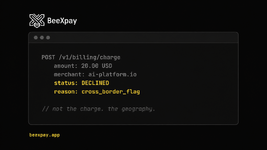
Why Your AI Tool Subscription Keeps Getting Declined
Paying for AI platforms, cloud credits or API access frequently fails for reasons that have nothing to do with the transaction itself — the biller is registered abroad, and the merchant category is already scored cautiously. Those two factors compound. A crypto-funded card removes the domestic...- irfanpak10
- Blog entry
- 1 min read
- ai tools api beexpay crypto card developer subscriptions
- Category: Cryptocurrencies
-
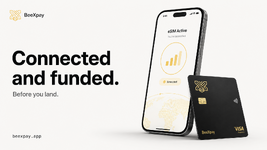
Card and eSIM in One App: Solving Both Travel Problems at Once
Landing somewhere new creates two needs at the same moment: a payment method that works and a phone that connects. They're usually treated as separate problems and solved reactively, in the arrivals hall, while exhausted. There's no reason they need to be separate. BeeXpay manages both from one...- irfanpak10
- Blog entry
- 1 min read
- beexpay connectivity crypto card esim travel
- Category: Cryptocurrencies
-
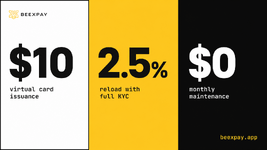
The Complete Fee Schedule, Explained in Three Categories
Fee transparency is claimed constantly and demonstrated rarely, usually because the actual numbers sit buried in a terms document. Here's the whole thing in one place. Issuance is a one-time cost: $10 virtual, $100 physical. Reload is 4% on the standard tier or 2.5% with full KYC. Transaction...- irfanpak10
- Blog entry
- 1 min read
- beexpay crypto card fee schedule fees transparency
- Category: Cryptocurrencies
-

Fund Before the Weekend: The Optimisation That Costs Nothing
Most financial optimisations involve a tradeoff. Reload timing doesn't — the fee is identical whether you top up on Friday afternoon or at a checkout on Saturday. That makes funding early strictly better, with no compensating downside. The only variable that changes is confirmation buffer: USDT...- irfanpak10
- Blog entry
- 1 min read
- beexpay crypto card funding reload timing weekend
- Category: Cryptocurrencies
-
You Can't Buy a Card From the Website — And That's the Point
Per BeeXpay's published terms, the website is an informational platform only. The mobile application is the sole channel used to order and manage cards. This sounds like a limitation but works as a protection. Every legitimate channel a product can be bought through is another channel someone...- irfanpak10
- Blog entry
- 1 min read
- beexpay crypto card impersonation official channels security
- Category: Cryptocurrencies
-

Why Nomads Get Declined Constantly (And What Actually Fixes It)
Card fraud models work by learning your normal spending pattern and flagging anything that departs from it. That design quietly assumes you have a stable home base — which someone relocating every few months simply doesn't. The result is a card that treats your entire legitimate life as...- irfanpak10
- Blog entry
- 1 min read
- beexpay crypto card digital nomad remote work travel
- Category: Cryptocurrencies
-

What You Actually Get With a Virtual Card
"Virtual card" sounds like a limited or provisional version of a real card. In practice it's a complete credential set that merchants process exactly like any other card. You get a card number, expiry date and CVV, available in your app as soon as funding confirms on-chain. Issuance is $10, it...- irfanpak10
- Blog entry
- 1 min read
- beexpay card details crypto card cvv virtual card
- Category: Cryptocurrencies
-
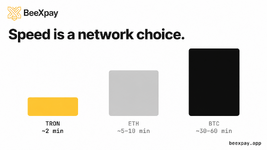
Why Funding Speed Depends on Your Network, Not the Platform
A common misunderstanding with crypto cards is blaming the platform for slow funding when the delay is almost entirely determined by which blockchain network you used for the deposit. Rough confirmation windows: USDT on Tron clears in about 1–2 minutes; USDT or USDC on Ethereum takes around...- irfanpak10
- Blog entry
- 1 min read
- beexpay bitcoin crypto card funding speed tron usdt
- Category: Cryptocurrencies
-
The Case for a Shopping-Only Virtual Card
Buying from an unfamiliar marketplace or smaller storefront creates two separate worries that people usually treat as one: whether the payment will clear, and whether handing over full card details to a one-time seller is wise. A dedicated virtual card addresses both. It removes the legacy...- irfanpak10
- Blog entry
- 1 min read
- beexpay crypto card marketplace online shopping virtual card
- Category: Cryptocurrencies
-
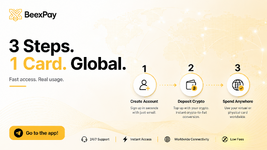
Exchange to Bank, or Straight to a Card? Comparing Both Routes
There are two routes from a crypto balance to an actual purchase, and they're rarely compared side by side because each is usually marketed on its own. The long route — exchange withdrawal, bank transfer, then spending — involves withdrawal fees, possible network costs, bank processing time in...- irfanpak10
- Blog entry
- 1 min read
- beexpay crypto card crypto off-ramp exchange withdrawal fees
- Category: Cryptocurrencies
-
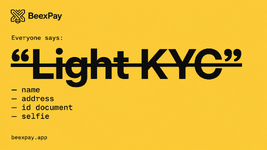
What Verification Actually Asks For: The Published Field List
"Light KYC" is used as a selling point across crypto card products, almost always without specifying what's actually collected — which makes it impossible to compare against anything. BeeXpay's published policy lists it: identity information (first and last name), email address, postal address...- irfanpak10
- Blog entry
- 1 min read
- beexpay crypto card kyc privacy verification
- Category: Cryptocurrencies
-

Why Your Subscription Renewal Failed (And You Weren't Told)
A failed subscription renewal is uniquely frustrating because it happens silently — no notification at the moment of failure, just an interrupted service days later that you then have to diagnose. The cause is usually fraud scoring applied to a recurring re-authorisation, which can look like a...- irfanpak10
- Blog entry
- 1 min read
- beexpay card declined crypto card subscription renewal virtual card
- Category: Cryptocurrencies
-
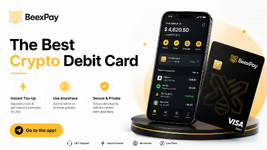
How to Get a Crypto Debit Card: The Full Step-by-Step Process
If you've considered getting a crypto-funded card but weren't sure what the signup actually involves, here's the complete sequence rather than the marketing summary. Everything starts in the mobile app — the website is informational only and can't be used to order a card. From there you choose...- irfanpak10
- Blog entry
- 1 min read
- beexpay crypto card crypto payments how to get a crypto card kyc virtual card
- Category: Cryptocurrencies
-
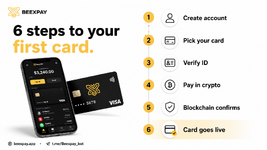
How to Get a Crypto Debit Card: The Full Step-by-Step Process
If you've considered getting a crypto-funded card but weren't sure what the signup actually involves, here's the complete sequence rather than the marketing summary. Everything starts in the mobile app — the website is informational only and can't be used to order a card. From there you choose...- irfanpak10
- Blog entry
- 1 min read
- beexpay crypto card crypto payments how to get a crypto card kyc virtual card
- Category: Cryptocurrencies
-

A Month of Specific Fixes, One Consistent Direction Heading Into August
Across a month of narrow, specific topics — card declines, instant freeze, KYC tiers, fee transparency, travel and connectivity setup — it's worth stepping back and naming what actually connected all of it. The consistent thread was reducing friction between holding crypto and being able to...- irfanpak10
- Blog entry
- 1 min read
- beexpay crypto card product direction roadmap
- Category: Cryptocurrencies
-

The Month-End Reload Habit That Avoids a Predictable Decline
Month-end reliably brings a cluster of charges close together — bills, subscription renewals, deferred purchases — landing at exactly the moment an underfunded card causes the most friction. Reloading a BeeXpay card a few days ahead of this predictable cluster, rather than reactively once a...- irfanpak10
- Blog entry
- 1 min read
- beexpay crypto card month-end billing reload timing
- Category: Cryptocurrencies
-

What Happens to Your Data If You Just Stop Using BeeXpay
It's a question most people never actually look up: what happens to an account and its data after you simply stop using an app. The answer is usually in the privacy policy, unread. For BeeXpay: an inactive account is automatically deleted after 3 years. KYC-specific data — identity documents...- irfanpak10
- Blog entry
- 1 min read
- account closure beexpay data retention gdpr privacy policy
- Category: Cryptocurrencies
-

Why Ad Platform Spend Keeps Getting Flagged (And How to Isolate It)
A frustrating pattern for small businesses: a bank card that's fine for everything else gets flagged or capped right as an ad campaign starts scaling and billing accelerates. This is largely a merchant-category artifact — ad platforms get scored more conservatively by many traditional issuers...- irfanpak10
- Blog entry
- 1 min read
- ad spend beexpay crypto card marketing budget small business
- Category: Cryptocurrencies