
hartono
Legendary Member

- Messages
- 17,047
- Joined
- Jun 26, 2012
- Messages
- 17,047
- Reaction score
- 2
- Points
- 125
Indonesian govt says school phone limits boost student interaction
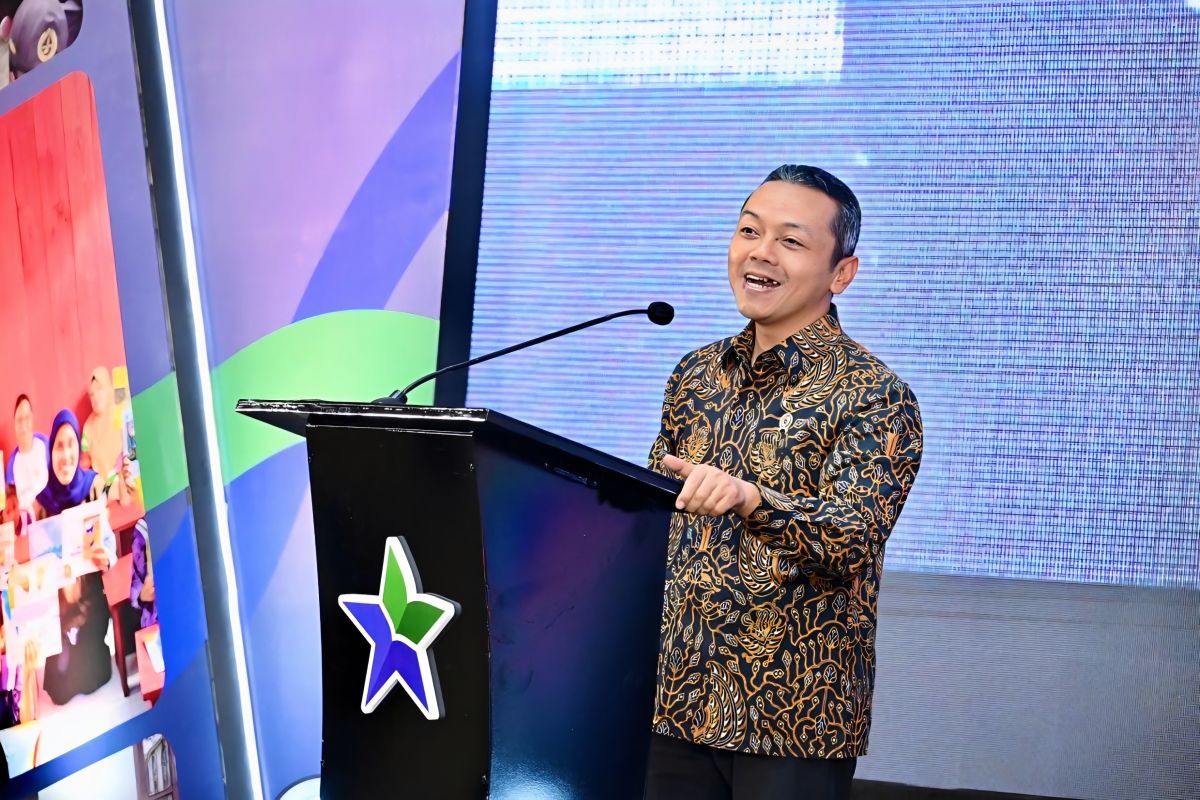
Deputy Minister of Primary and Secondary Education Fajar Riza Ul Haq delivers a keynote address during the National Librarians' Day commemoration at the National Library in Central Jakarta on Tuesday (July 7, 2026). (ANTARA/HO-Ministry of Primary and Secondary Education Public Relations)
Jakarta (ANTARA) - Indonesia’s Education Ministry says limiting smartphone use at schools has improved student interaction, with students spending breaks socializing rather than looking at their screens.
Deputy Minister Fajar Riza Ul Haq said the policy aims to promote healthy technology habits and prevent excessive dependence on mobile devices from an early age.
“The ministry issued Circular Letter No. 18 of 2026 on restricting device use to help students avoid dependence on phones,” Fajar said Monday.
Limiting digital-device use is also part of broader efforts to protect students’ mental health amid rapid technological growth, he said.
Education traditionally has three pillars—families, schools and communities—but a fourth has emerged, requiring stakeholders to work together as an integrated educational ecosystem, Fajar said.
Wisnu Utomo, principal of Bumi Cendekia Junior High School in Sleman, Yogyakarta, said students may bring digital devices under clear rules.
Laptops may be used only one day a week, while smartphones are limited to learning activities under teachers’ supervision.
When laptops were previously allowed almost daily, students became more easily distracted and teachers needed more preparation time because students remained focused on their devices, Wisnu said.
“We support Circular Letter No. 18 of 2026. The goal is not banning devices but building responsible usage. Ultimately, students should limit smartphone use through self-awareness,” he said.
Since the restrictions began, students have been better prepared for classes, interacted more with peers, participated more in sports and spent more free time reading, Wisnu said.
Indonesian language teacher Triana Ratnasari said technology remains an important learning tool, including when students watch sample drama performances on YouTube.
“Students still use technology for learning. We encourage them to process information and express their own views rather than become dependent on technology,” Triana said.
Students are also familiar with artificial intelligence, but school restrictions and campus-based assignments encourage them to use AI purposefully as a learning aid rather than a shortcut, she said.
Indonesian govt says school phone limits boost student interaction
Indonesia’s Education Ministry says limiting smartphone use at schools has improved student interaction, with students spending breaks socializing ...
 en.antaranews.com


