
hartono
Legendary Member

- Messages
- 17,047
- Joined
- Jun 26, 2012
- Messages
- 17,047
- Reaction score
- 2
- Points
- 125
Airlangga says energy transition can drive new economic growth
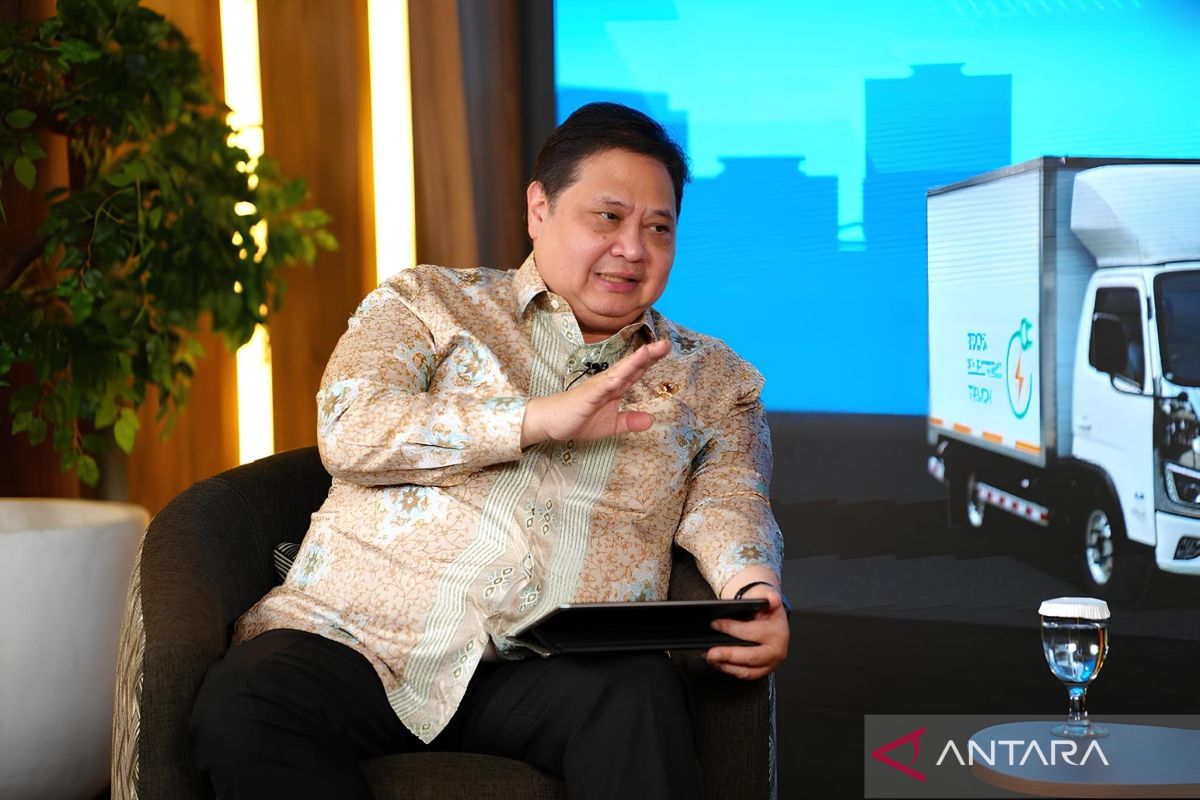
Coordinating Minister for Economic Affairs Airlangga Hartarto attends The Big Idea Forum (TBIF) – Indonesia Zero Emission Heavy-duty Vehicle Summit 2026, themed "Powering Growth: Transforming the Transportation Sector," in Jakarta, Wednesday (Aug. 26, 2026). (ANTARA/HO-Coordinating Ministry for Economic Affairs/mrt)
Jakarta (ANTARA) - Indonesia's energy transition toward its 2060 net-zero emissions target can create new sources of economic growth through investment and industrialization, Coordinating Minister for Economic Affairs Airlangga Hartarto said Thursday.
"First-half economic growth was 5.45 percent. Compared with ASEAN and G20 countries, Indonesia is among the top three, and we can achieve high growth with low inflation," Airlangga said in Jakarta.
He said the government was pursuing the transition alongside efforts to strengthen energy security and create new economic opportunities.
Energy security is a key foundation for economic stability amid global volatility. The government is diversifying energy sources and reducing reliance on imports by increasing the use of domestic energy, including through the Biodiesel 50 (B50) program, a diesel fuel blend containing 50 percent biodiesel.
The policy is also expected to help stabilize energy prices and contain inflationary pressures.
Investment and industrialization remain important growth drivers. Investment realization grew by 7.2 percent in the first half of 2026, particularly in manufacturing and related supply chains, according to the Investment Coordinating Board (BKPM).
Rising electricity and gas demand, as well as continued investment in the digital sector, including data centers, also indicate sustained economic activity.
The government is promoting renewable energy and expanding domestic solar panel production to meet industrial demand for green energy.
In transportation, it is promoting low-emission technologies and energy sources based on the characteristics and operational needs of each mode.
The government is expanding B50 use, while electric vehicles, biofuels and hydrogen technologies are being developed to reduce transport emissions.
Hybrid vehicles are also part of the transition toward battery electric vehicles in the passenger vehicle segment.
Airlangga said hybrid vehicle sales grew about 40 percent in the first half of 2026 from the same period last year.
"With unsubsidized fuel prices fluctuating, people see electric vehicles as a way to save on costs. So, in the first half of this year, growth in hybrid vehicles reached 40 percent from last year. This is a very good figure and shows that people are becoming more aware of using electricity," he said.
The growth of low-emission vehicles is also supporting Indonesia's automotive industry, Airlangga said.
The government is strengthening domestic production capacity for vehicles, batteries and components while adjusting support facilities to develop the National Car and National Electric Motorcycle ecosystems.
The measures are also aimed at increasing domestic content and value added. Industry contributes about 18-19 percent of Indonesia's economy, with automotive manufacturing among the sectors with significant multiplier effects.
The Spokesperson for the Coordinating Ministry for Economic Affairs, Haryo Limanseto, said low-emission transport transformation needed to go hand in hand with stronger support for domestic energy, investment, infrastructure, industry, and national supply chains.
"Low-emission transport transformation is not only about changing vehicle technology, but also about how we build an ecosystem capable of creating domestic value added," Haryo said.
He said stronger support for energy, infrastructure, industry, and supply chains could make the energy transition a new source of economic growth while strengthening Indonesia's competitiveness.
Airlangga says energy transition can drive new economic growth
Indonesia's energy transition toward its 2060 net-zero emissions target can create new sources of economic growth through investment and ...
 en.antaranews.com


